
State Farm Writes Multi-Car Policies in Tennessee
State Farm is licensed to write auto insurance in Tennessee and actively writes multi-car policies across the state. The carrier holds NAIC company code 25178 and group code 176, operates with an AM Best A+ financial strength rating, and maintains agent networks throughout Tennessee. If you currently hold a State Farm policy on one vehicle and need to add a second or third car, State Farm will write that coverage on the same policy.
The structural question most Tennessee households face is not whether State Farm writes multi-car coverage — it does — but how the carrier structures the multi-vehicle discount, what happens to your premium when you add a car mid-term, and whether combining two separate State Farm policies into one shared household policy actually saves money or triggers a re-rate that costs more than you expect.
Compare car insurance rates in your state
Get quotes from licensed carriers — no obligation, no spam, results in minutes.
Get Your Free QuoteTennessee Minimum Liability
$25,000 / $50,000 / $25,000
Tennessee requires $25,000 bodily injury per person, $50,000 bodily injury per accident, and $25,000 property damage. Every vehicle on your State Farm policy must carry at least these limits to register and legally drive in Tennessee.
Tennessee Department of Safety, Driver Services
The Multi-Vehicle Discount Requires One Policy at One Address
State Farm's multi-vehicle discount applies when you insure two or more cars on a single policy garaged at the same household address. The discount does not apply across separate policies, even if both policies are with State Farm and both cover vehicles you own. A household with one car on Policy A and a second car on Policy B — both State Farm, both in your name — does not receive the multi-vehicle discount. The vehicles must sit on the same policy.
The same-address requirement means a car titled to you but garaged at a different address — a college student's car at a campus apartment, a work vehicle parked at a second property, a classic car stored at a separate garage — may not qualify for the multi-vehicle discount even if it sits on your policy. State Farm underwrites each vehicle to its actual garaging address, and the discount structure assumes household consolidation.
If you and a spouse each hold separate State Farm policies and you want to combine them after marriage or a move, the combined policy will receive the multi-vehicle discount. But combining policies triggers a full re-rate of both vehicles, not a simple discount applied to the sum of the two premiums. The re-rate recalculates coverage based on the combined household's driving records, the vehicles' garaging address, and State Farm's current rate structure. The combined premium can be lower than the sum of the two separate policies, but it is not guaranteed.
Adding a vehicle mid-term re-rates your entire policy, not just the new car. The multi-vehicle discount applies, but so does a fresh underwriting calculation across every vehicle and driver on the policy.
How Adding a Car Mid-Term Changes Your Premium
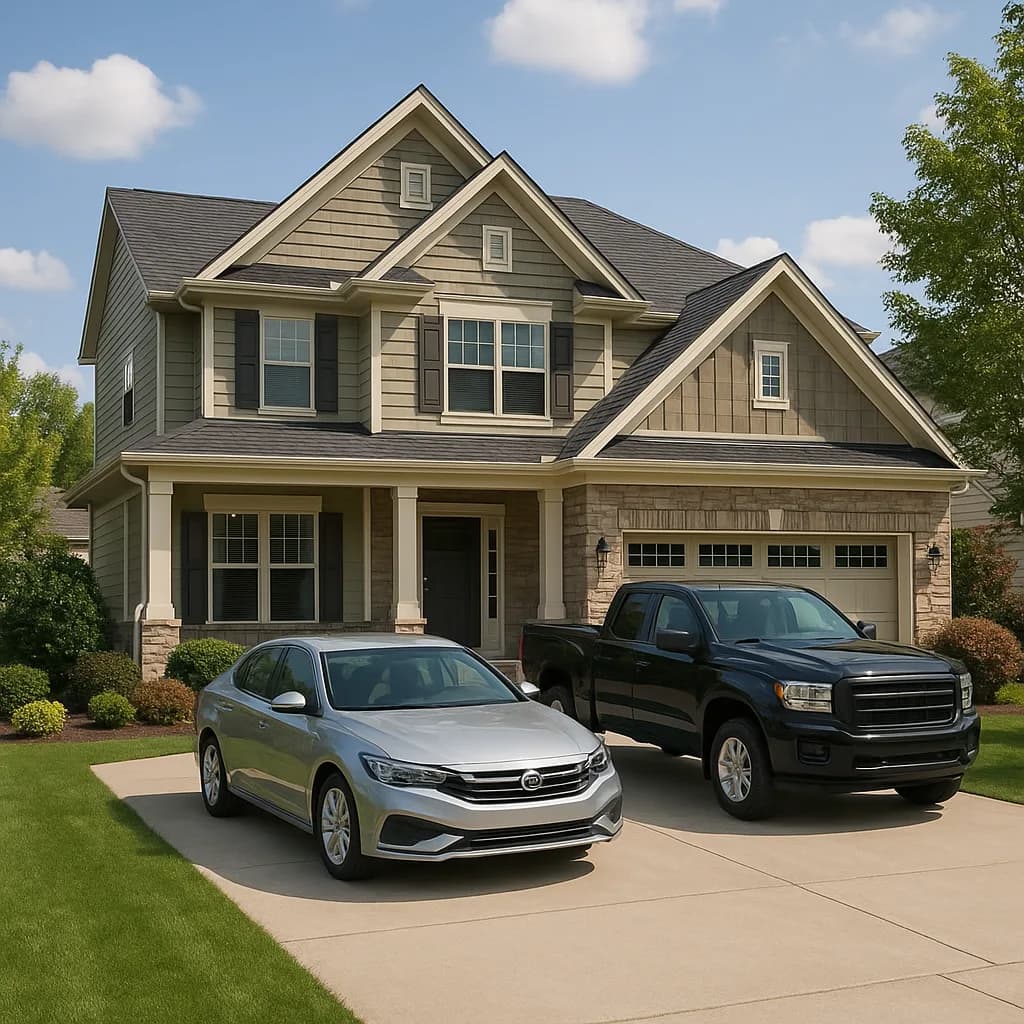
When you add a vehicle to your State Farm policy mid-term, the carrier re-rates the entire policy. The system recalculates your premium based on the combined risk profile of every vehicle and every driver listed on the policy, applies the multi-vehicle discount to the new total, and issues a revised premium effective the date you add the car. The multi-vehicle discount lowers the combined premium compared to insuring each car separately, but the re-rate can produce a total premium higher than your original premium plus a simple per-car add.
The re-rate accounts for the new vehicle's year, make, model, garaging address, and how it changes the household's overall risk. Adding a high-value SUV to a policy that previously covered one sedan triggers a different re-rate than adding a second sedan of similar value. The multi-vehicle discount applies to the new total, but the discount does not override the underwriting reality that a higher-risk vehicle raises the policy's base premium before any discount.
Related Articles






State Farm's Grace Period for Newly Purchased Vehicles
Tennessee law does not mandate a specific grace period for adding a newly purchased vehicle to your existing auto insurance policy, but State Farm typically extends automatic coverage to a newly acquired car for a limited window — often 14 to 30 days — if you already insure at least one vehicle on an active policy. The grace period assumes you notify State Farm of the new vehicle within that window and formally add it to the policy.
If you buy a second car and do not notify State Farm within the grace window, the new vehicle is not covered. A claim on an unreported vehicle will be denied. The grace period is not a substitute for adding the car to your policy; it is a temporary extension that gives you time to contact your agent and complete the endorsement. Missing the window leaves the new car uninsured, even if you assumed it was automatically covered.
The safest path: contact your State Farm agent the day you purchase the vehicle, confirm the grace period in writing, and add the car to your policy immediately. The mid-term re-rate happens either way — delaying the endorsement does not avoid it, and waiting risks a coverage gap.
Tennessee Uninsured Motorist Rate
21.3%
More than one in five Tennessee drivers operates without insurance. Uninsured motorist coverage protects your household when an at-fault driver has no coverage, and it applies to every vehicle on your State Farm multi-car policy.
Insurance Information Institute, 2023
Combining Two State Farm Policies After Marriage or a Move
If you and a spouse each hold separate State Farm policies and you want to combine them into one household policy, State Farm will write the combined policy and apply the multi-vehicle discount. The combined policy must list both spouses, every vehicle, and every driver in the household. The vehicles must be garaged at the same address.
Combining policies triggers a full re-rate. State Farm underwrites the combined household as a new risk, evaluating both spouses' driving records, the combined vehicle profile, and the shared garaging address. The multi-vehicle discount applies to the combined premium, but the re-rate can produce a total higher than the sum of the two original premiums if one spouse's driving record or vehicle adds significant risk. The combined policy is not always cheaper — it depends on the household's actual risk profile after consolidation.
Compare State Farm Against Other Tennessee Multi-Car Carriers
State Farm writes Tennessee multi-car policies, but it is not the only carrier that does. Tennessee's auto insurance market includes 28 carriers actively writing coverage in the state, many of which offer multi-vehicle discounts with different same-policy requirements, different re-rate structures, and different base premiums before the discount. A smaller discount on a lower base rate can produce a lower combined premium than a larger discount on a higher base rate.
Carriers writing Tennessee multi-car policies include Geico, Progressive, Allstate, Nationwide, Farmers, Liberty Mutual, Travelers, USAA (for eligible military households), and others. Each carrier structures its multi-vehicle discount differently: some require every vehicle garaged at the same address, some allow separate garaging addresses within the same household, and some apply the discount only when every driver on the policy is listed on every vehicle. The only way to know which carrier produces the lowest combined premium for your household is to compare quotes across multiple carriers with your actual vehicle and driver profile.
Tennessee does not mandate uninsured motorist coverage, but with 21.3% of Tennessee drivers operating without insurance, adding uninsured motorist coverage to a multi-car policy protects every vehicle and every household member under one consolidated limit. State Farm offers uninsured motorist coverage as an optional add; compare how other carriers price it on multi-car policies before deciding.