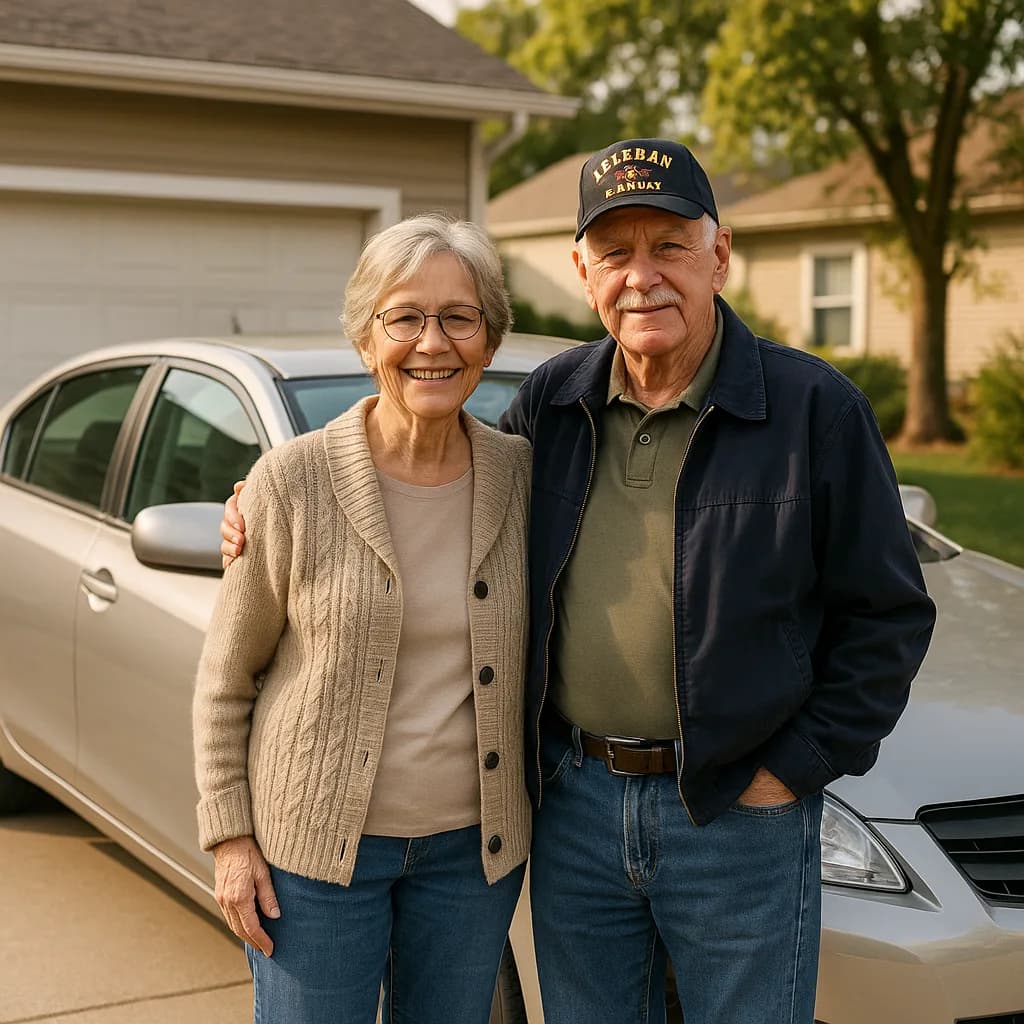
You Added a Second Car and Want to Know What Happens to Your Policy
You bought a second vehicle, your household has a clean driving record, and you need to know whether to add it to your existing auto policy or start a new one. The multi-car discount sounds straightforward, but carriers re-rate your entire policy when you add a vehicle mid-term, not just tack on a flat amount for the new car.
Tennessee requires $25,000 bodily injury per person, $50,000 bodily injury per accident, and $25,000 property damage on every vehicle you own. The state does not mandate uninsured motorist coverage or personal injury protection, but every car on your policy must meet the minimum liability limits to register and drive legally. This article walks you through how the multi-car discount works, what adding a vehicle does to your premium, and how to structure coverage across two or more cars when your household has no violations.
Compare car insurance rates in your state
Get quotes from licensed carriers — no obligation, no spam, results in minutes.
Get Your Free QuoteTennessee Minimum Liability Per Vehicle
$25,000/$50,000/$25,000
Every vehicle registered in Tennessee must carry at least $25,000 bodily injury per person, $50,000 bodily injury per accident, and $25,000 property damage. These minimums apply to each car on your policy, not to the policy as a whole.
Tennessee Department of Safety, Driver Services
The Multi-Car Discount Requires Every Vehicle on One Policy
The multi-car discount applies when you insure two or more vehicles on the same policy. Most carriers in Tennessee offer this discount, but the requirement is strict: every vehicle must sit on one policy, and in most cases the cars must share a garaging address. A vehicle titled to a household member on a separate policy does not count toward the same-policy requirement, even if that person lives at the same address.
When you add a second or third vehicle, the carrier re-rates the entire policy rather than simply adding a fixed amount for the new car. The re-rating accounts for the additional vehicle's make, model, year, garaging location, and how it changes the household's total exposure. A clean driving record helps, but the premium increase depends on the vehicle you are adding and how the carrier structures its multi-car discount.
Some carriers write the discount as a percentage off each vehicle's premium; others reduce the base rate for the policy as a whole. A smaller discount on a lower base rate can beat a larger discount on a higher one, which is why comparing carriers that write multi-vehicle policies in Tennessee matters more than chasing the discount percentage alone.
A vehicle titled to someone outside your household or on a separate policy does not qualify for the same-policy multi-car discount, even if garaged at the same address.
How Adding a Vehicle Mid-Term Re-Rates Your Policy

When you report the new vehicle, the carrier re-rates the policy effective the date you acquired the car. The re-rating accounts for the vehicle's value, age, safety features, theft risk, and how it changes the household's total liability exposure. A second sedan garaged at the same address as your first car typically adds less to the premium than a high-performance vehicle or a truck with higher liability limits. The carrier applies the multi-car discount to the re-rated policy, not to the old policy plus a flat add-on for the new car.
If you miss the grace period, the carrier may still add the vehicle retroactively, but you risk a coverage gap if a claim occurs before you report it. Some carriers require an inspection or VIN verification for vehicles added mid-term, especially if the car is older or has a salvage title. Clean-record households have more flexibility here than drivers with violations, but the procedural requirement is the same: report the vehicle within the grace window, provide the VIN and title information, and confirm the coverage selections for the new car match the rest of the policy.
Related Articles






Tennessee Carriers Writing Multi-Vehicle Policies for Clean-Record Households
Tennessee has 28 carriers writing auto insurance statewide, and most of them write multi-vehicle policies for clean-record households. State Farm, Geico, Progressive, Allstate, Nationwide, and Farmers all write multi-car policies in Tennessee and offer online quotes. USAA writes multi-vehicle policies for military-affiliated households and offers the multi-car discount on policies with two or more vehicles.
Carriers structure the multi-car discount differently. Some apply a percentage reduction to each vehicle's premium; others reduce the base rate for the policy as a whole and apply the savings across all vehicles. A clean driving record qualifies you for preferred or standard-tier pricing at most carriers, but the actual premium depends on the vehicles you are insuring, where they are garaged, and how the carrier weights those factors in its rating algorithm.
When you compare carriers, request quotes for the same coverage limits and deductibles on every vehicle. The multi-car discount is one factor, but the base rate matters more. A carrier with a smaller multi-car discount and a lower base rate for your household's vehicles can beat a carrier with a larger discount and a higher starting premium. Tennessee does not cap how carriers calculate the multi-car discount, so the percentage varies by carrier and by the vehicles on the policy.
Tennessee Auto Insurance Carriers Statewide
28 carriers
Tennessee has 28 carriers writing auto insurance statewide, and most write multi-vehicle policies for clean-record households. Comparing carriers that write your household's vehicles matters more than chasing the multi-car discount percentage alone.
Tennessee Department of Commerce & Insurance
Combining Two Policies After Marriage or a Household Change
When two people with separate auto policies move in together or marry, combining the policies onto one multi-car policy usually lowers the combined premium, but not always. The combined policy re-rates both vehicles under one household rating, which accounts for both drivers' records, both vehicles' characteristics, and the new garaging address. A clean-record household has the best chance of saving by combining, but the actual result depends on the vehicles and the carrier's rating structure.
Some carriers require both vehicles to be titled to the same person or to both spouses jointly to qualify for the multi-car discount. Others allow vehicles titled to different household members as long as they are garaged at the same address and listed on the same policy. Check the carrier's same-policy requirement before you combine: a vehicle that stays titled to one spouse but is added to the other spouse's policy may not qualify for the discount at all carriers.
What to Do Right Now
Request quotes from at least three carriers that write multi-vehicle policies in Tennessee. Provide the VIN, year, make, and model for every vehicle you want to insure, and confirm the garaging address for each car. Ask each carrier how it structures the multi-car discount and whether the discount applies when vehicles are titled to different household members. Compare the total premium for all vehicles on one policy, not just the discount percentage. Tennessee requires $25,000/$50,000/$25,000 liability on every vehicle, but you can choose higher limits and add collision and comprehensive coverage on any car. The carrier that offers the lowest combined premium for your household's vehicles is the one that fits your situation, not the one advertising the largest multi-car discount.