
Tennessee Requires Coverage on Every Vehicle You Own
You just added a second vehicle to your household and now you need to register it with the Tennessee Department of Revenue. The clerk asks for proof of insurance. You hand over your existing policy card, and they tell you the new vehicle is not listed. You assumed your current policy covered it automatically during the grace period, but Tennessee registration rules require the specific vehicle to appear on a compliant policy before the county clerk will issue plates.
Tennessee law mandates minimum liability coverage on every registered vehicle: $25,000 per person for bodily injury, $50,000 per accident for bodily injury, and $25,000 for property damage. When you own multiple cars, each one must meet these minimums independently. A single policy can cover all your vehicles, but the state does not pool limits across cars. If you carry only the minimum and you have three vehicles on one policy, each vehicle must still satisfy the $25,000/$50,000/$25,000 floor. This article walks you through how Tennessee applies its requirements to multi-vehicle households, what happens when you add or remove a car, and how to structure your policy so every vehicle stays compliant without overpaying.
Compare car insurance rates in your state
Get quotes from licensed carriers — no obligation, no spam, results in minutes.
Get Your Free QuoteTennessee Minimum Liability Per Vehicle
$25,000 / $50,000 / $25,000
Every registered vehicle in Tennessee must carry at least $25,000 bodily injury per person, $50,000 bodily injury per accident, and $25,000 property damage. The state does not allow you to split one set of limits across multiple cars.
Tennessee Code Annotated § 55-12-139
State Minimums Apply Per Vehicle, Not Per Policy
Tennessee's liability statute treats each vehicle as a separate insurable interest. When you add a second car to your policy, the carrier does not divide your existing $25,000/$50,000/$25,000 limits between the two vehicles. Instead, the policy must provide the full minimum for each car. If you own three vehicles, all three must meet the $25,000/$50,000/$25,000 floor independently.
This structure matters most when you carry only minimum coverage. A household with two cars on a minimum-limit policy pays for two sets of minimums, not one set shared across both vehicles. When you add a third car mid-term, the carrier re-rates the policy to include the new vehicle's minimums, and your premium increases by the cost of insuring that additional car at the state floor.
Carriers calculate premiums per vehicle based on the car's make, model, year, garaging address, and the drivers assigned to it. Adding a vehicle mid-term triggers a policy endorsement that adds the new car's premium to your existing bill, prorated for the remainder of the term. The state minimum applies to the new vehicle immediately, and the carrier will not issue proof of insurance for registration until the endorsement is processed and paid.
Tennessee registration clerks will not issue plates for a vehicle that does not appear by VIN on a compliant insurance policy. Adding a car mid-term requires an endorsement before you can register.
How to Add a Vehicle to Your Tennessee Policy

Contact your carrier as soon as you purchase or take possession of the new vehicle. Provide the VIN, make, model, year, and the name of the primary driver. The carrier will generate an endorsement adding the vehicle to your policy and re-rate your premium to include the new car's cost. Most carriers process endorsements within one business day, but some require underwriting review if the new vehicle is high-value or if you are adding a driver at the same time. Request an updated proof-of-insurance card or electronic filing confirmation that lists the new vehicle by VIN.
Take the updated proof of insurance to your county clerk's office when you register the new vehicle. Tennessee requires the insurance document to show the specific VIN, the policy number, the coverage effective date, and confirmation that the policy meets the $25,000/$50,000/$25,000 minimum. The clerk will not accept a generic policy declaration that does not list the new car. If your carrier files electronically with the Tennessee Department of Safety and Homeland Security, the clerk can verify coverage in real time, but you should still carry a printed or digital proof-of-insurance card in case the system is unavailable.
Related Articles

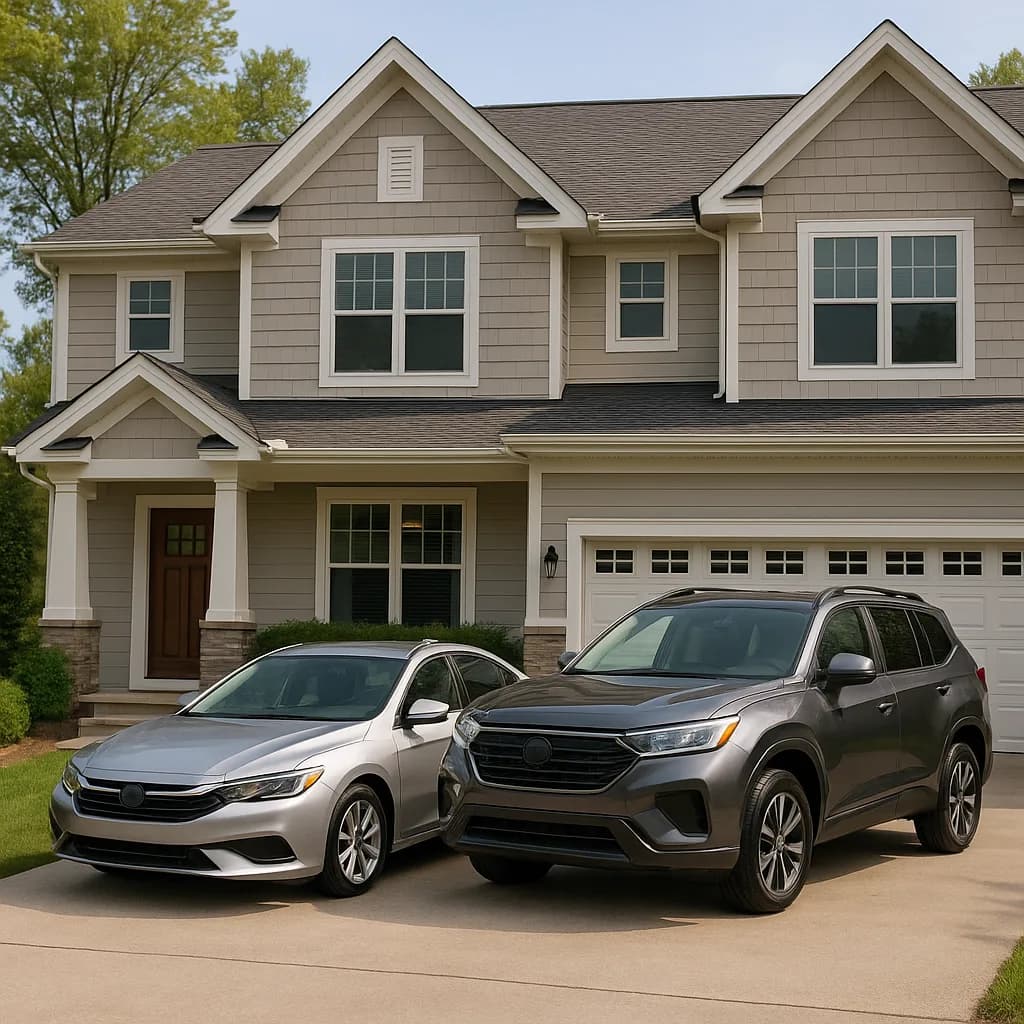




Multi-Car Discount Requires All Vehicles on One Policy
Tennessee carriers offer a multi-car discount when you insure two or more vehicles on the same policy. The discount reduces the per-vehicle premium, but it applies only when every car in the household sits on one policy and shares the same garaging address. If you own three cars but insure two on one policy and one on a separate policy, the discount applies only to the two-car policy. The third car pays full rate.
The multi-car discount typically reduces each vehicle's premium by a percentage of the base rate, but the exact amount varies by carrier and by the number of vehicles. Adding a third or fourth car to an existing two-car policy usually increases the discount slightly, but the marginal savings shrink with each additional vehicle. Carriers calculate the discount after applying all other rating factors, so the discount amount depends on the combined risk profile of all vehicles and drivers on the policy.
When you add a vehicle mid-term, the carrier recalculates the multi-car discount for the entire policy, not just the new car. If the new vehicle is higher-risk than your existing cars, the overall premium may increase more than the cost of the new car alone, because the carrier re-rates the policy based on the new combined risk. Conversely, adding a low-risk vehicle to a high-risk policy can lower the per-vehicle cost slightly, because the discount now applies to a larger pool.
Tennessee Uninsured Motorist Rate
21.3%
More than one in five Tennessee drivers operates a vehicle without insurance. Uninsured motorist coverage protects you when an at-fault driver cannot pay for damages, and it costs significantly less than collision or comprehensive coverage.
Insurance Research Council, 2023
Removing a Vehicle Changes Your Premium Immediately
When you sell, total, or otherwise remove a vehicle from your household, contact your carrier immediately to delete it from the policy. Tennessee carriers prorate the premium refund based on the number of days remaining in the term, but they do not issue the refund until you confirm the vehicle is no longer in your possession. If you remove a vehicle mid-term and do not notify the carrier, you continue paying for coverage on a car you no longer own, and the multi-car discount remains calculated based on the original vehicle count.
Removing a vehicle also recalculates the multi-car discount for the remaining cars. If you drop from three vehicles to two, the discount shrinks slightly, and the per-vehicle premium for the remaining cars increases. The net effect depends on which vehicle you removed and how the carrier weighted it in the original risk calculation. Removing a high-risk vehicle lowers the overall policy premium more than removing a low-risk vehicle, even after accounting for the discount change.
Compare Carriers That Write Multi-Vehicle Policies in Tennessee
Tennessee law does not regulate how carriers calculate the multi-car discount, so the savings vary widely by company. Some carriers reduce the per-vehicle premium by a flat percentage; others apply tiered discounts that increase with each additional vehicle. When you compare quotes, ask each carrier how they structure the multi-car discount and whether they cap the number of vehicles eligible for the discount. A few carriers limit the discount to the first three or four vehicles, so if you own five or more cars, the fifth vehicle may not receive any discount at all.
Carriers writing multi-vehicle policies in Tennessee include State Farm, GEICO, Progressive, Allstate, Nationwide, Farmers, Liberty Mutual, Travelers, and others. Each carrier rates vehicles differently based on make, model, year, garaging ZIP code, and driver assignment. A carrier that offers the lowest rate for your first vehicle may not offer the best rate when you add a second or third car, because the multi-car discount structure varies. Request quotes from at least three carriers and compare the total policy premium for all vehicles combined, not just the per-vehicle cost. The carrier with the best multi-car discount is the one that delivers the lowest total premium for your household's specific mix of vehicles and drivers.