
What Uninsured Motorist Coverage Actually Protects
You elected uninsured motorist coverage when you bought your first car, and now you're adding a second vehicle to the same Tennessee policy. The question you're asking: does that UM coverage extend to the new car automatically, or do you need to elect it again for each vehicle you add?
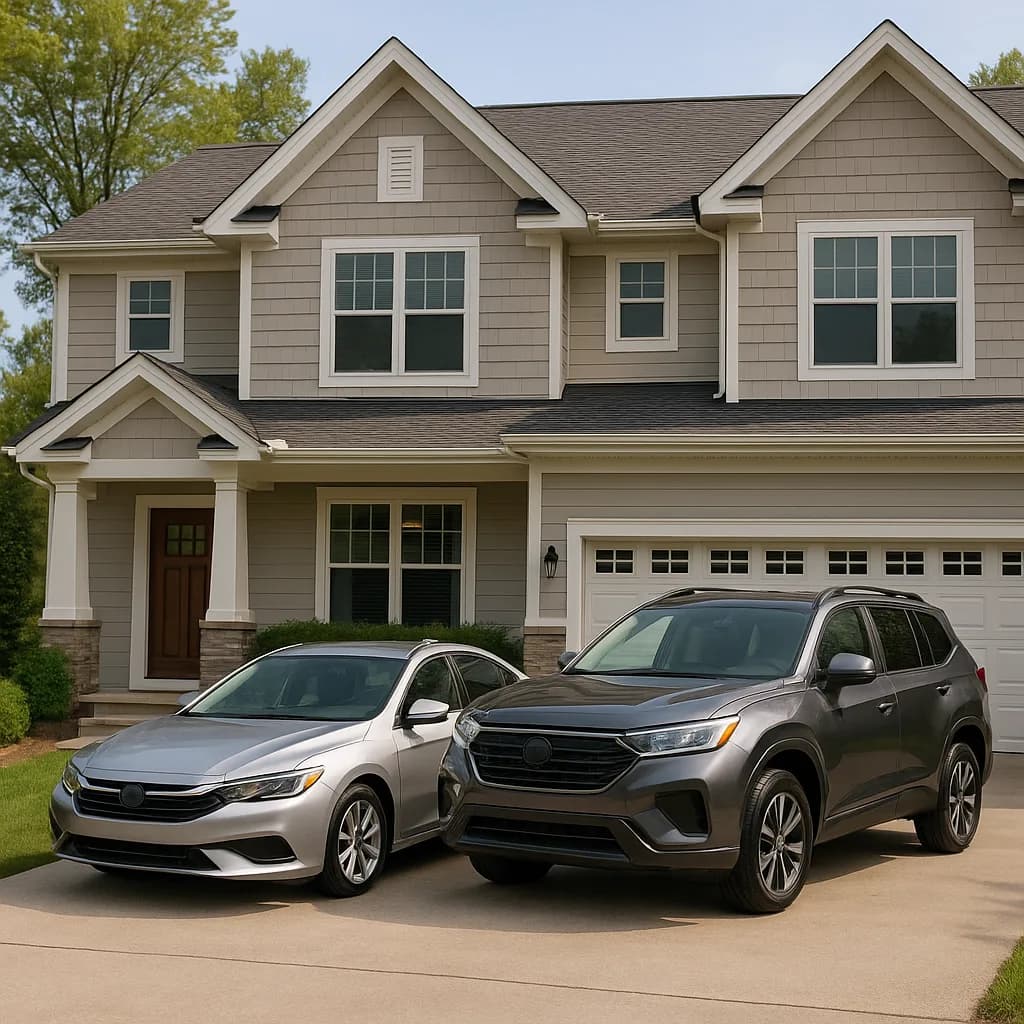
The structural reality is simpler than most multi-car households expect. Uninsured motorist coverage is a per-policy election, not a per-vehicle one. When you elect UM on a Tennessee auto policy, it covers every vehicle listed on that policy and every household member who drives them, under one shared limit. Adding a third or fourth car does not require a separate UM election — the coverage you already elected extends to the new vehicle the moment it joins the policy.
Compare car insurance rates in your state
Get quotes from licensed carriers — no obligation, no spam, results in minutes.
Get Your Free QuoteTennessee Uninsured Motorist Rate
21.3%
More than one in five Tennessee drivers carries no liability insurance, meaning the vehicle that hits yours may have no coverage to pay your claim. Uninsured motorist coverage fills that gap.
Insurance Information Institute, 2023
How UM Coverage Works Across Multiple Vehicles
Tennessee does not require uninsured motorist coverage. The state's minimum liability requirements are $25,000 per person, $50,000 per accident for bodily injury, and $25,000 for property damage — but none of those minimums protect you when the at-fault driver has no insurance. UM coverage is optional, and carriers must offer it when you buy a policy, but you can decline it in writing.
When you elect UM coverage, you choose a limit that mirrors your liability structure: a per-person limit and a per-accident limit. That limit applies to the entire policy, not to each vehicle individually.
Adding a vehicle mid-term does not change your UM limit or require a new election. The coverage extends to the new car automatically. Your premium adjusts to reflect the additional vehicle, but the UM limit you elected at policy inception remains in force across every car on the policy.
The same principle applies when you remove a vehicle. Dropping a car from the policy does not reduce your UM limit — the limit stays the same, now covering fewer vehicles. If you want to adjust the UM limit itself, that is a separate policy change, not a per-vehicle decision.
UM coverage is a policy-level election. You cannot carry different UM limits on different vehicles within the same policy — every car shares the same limit.
What Uninsured Motorist Coverage Pays For

Uninsured motorist bodily injury (UMBI) pays medical bills, lost wages, and pain-and-suffering damages when an uninsured driver injures you or a household member. It also covers hit-and-run accidents where the at-fault driver cannot be identified. The limit you elect is the maximum the policy will pay per person and per accident, and it applies whether the injury happens in your own vehicle, a household member's vehicle on the same policy, or when a covered driver is a pedestrian struck by an uninsured motorist.
Uninsured motorist property damage (UMPD) pays to repair your vehicle after an accident with an uninsured driver, up to the limit you elect. UMPD does not cover hit-and-run accidents unless you can identify the at-fault driver and prove they were uninsured — if the driver flees and cannot be identified, UMPD does not apply, but collision coverage does. Many Tennessee households elect UMBI without UMPD, relying on collision coverage to handle vehicle damage regardless of the at-fault driver's insurance status.
Related Articles



How UM Coverage Interacts With Collision and Liability
UM coverage does not replace collision or liability coverage. Collision pays to repair your own vehicle after an accident regardless of fault and regardless of whether the other driver has insurance. UM property damage only pays when the at-fault driver is uninsured and identifiable. If you carry both collision and UMPD, you file the collision claim first — UMPD acts as secondary coverage in most scenarios.
Liability coverage protects the other driver when you cause the accident. UM coverage protects you when the other driver causes the accident and has no insurance. The two coverages operate in opposite directions. A household with multiple vehicles needs both: liability to meet Tennessee's financial responsibility law and protect household assets, and UM to protect household members when someone else's lack of insurance leaves them with no way to recover damages.
Underinsured motorist coverage (UIM) is a related product that pays when the at-fault driver carries liability insurance, but their limit is too low to cover your damages. Tennessee treats UIM as a separate election from UM, and many carriers bundle the two as UM/UIM with a single combined limit. When you add a vehicle to a policy that already carries UM/UIM, the combined limit extends to the new car automatically, just as standalone UM would.
Tennessee Minimum Liability Limits
$25,000 / $50,000
Tennessee requires $25,000 per person and $50,000 per accident in bodily injury liability, but does not require you to carry UM coverage at any level. Many households elect UM limits that match or exceed their liability limits.
Tennessee Department of Safety and Homeland Security
Adjusting UM Coverage When You Add or Remove Vehicles
When you add a vehicle, your carrier re-rates the policy to reflect the additional exposure. The UM premium increases because the policy now covers one more vehicle under the same limit, but the limit itself does not change unless you request an adjustment. If your household originally carried $50,000 per person in UM coverage on two vehicles, adding a third vehicle keeps that $50,000 limit in place — the policy now covers three vehicles under the same per-accident cap.
Some households increase their UM limit when they add a vehicle, reasoning that more vehicles on the road increase the household's exposure to uninsured-motorist risk. That adjustment is a separate policy change. You contact the carrier, request a higher UM limit, and the carrier re-rates the entire policy at the new limit. The new limit applies to every vehicle on the policy from that point forward.
Compare Carriers That Write Multi-Vehicle Policies in Tennessee
Not every carrier prices UM coverage the same way across multiple vehicles. Some apply a per-vehicle UM charge that scales with the number of cars on the policy; others price UM as a flat policy-level charge that increases only modestly when you add a vehicle. The difference becomes visible when you compare quotes for a three- or four-car household.
Tennessee has 27 carriers writing standard and non-standard auto insurance, and most offer UM coverage as an optional election. Carriers that specialize in multi-vehicle households — State Farm, Geico, Progressive, Allstate — typically offer competitive UM pricing when you insure multiple cars on one policy. Compare quotes with the same UM limit across carriers to see how each structures the per-vehicle charge. The carrier that offers the lowest liability premium may not offer the lowest UM premium, and the difference compounds when you insure three or more vehicles.