
The Multi-Car Rental Coverage Question
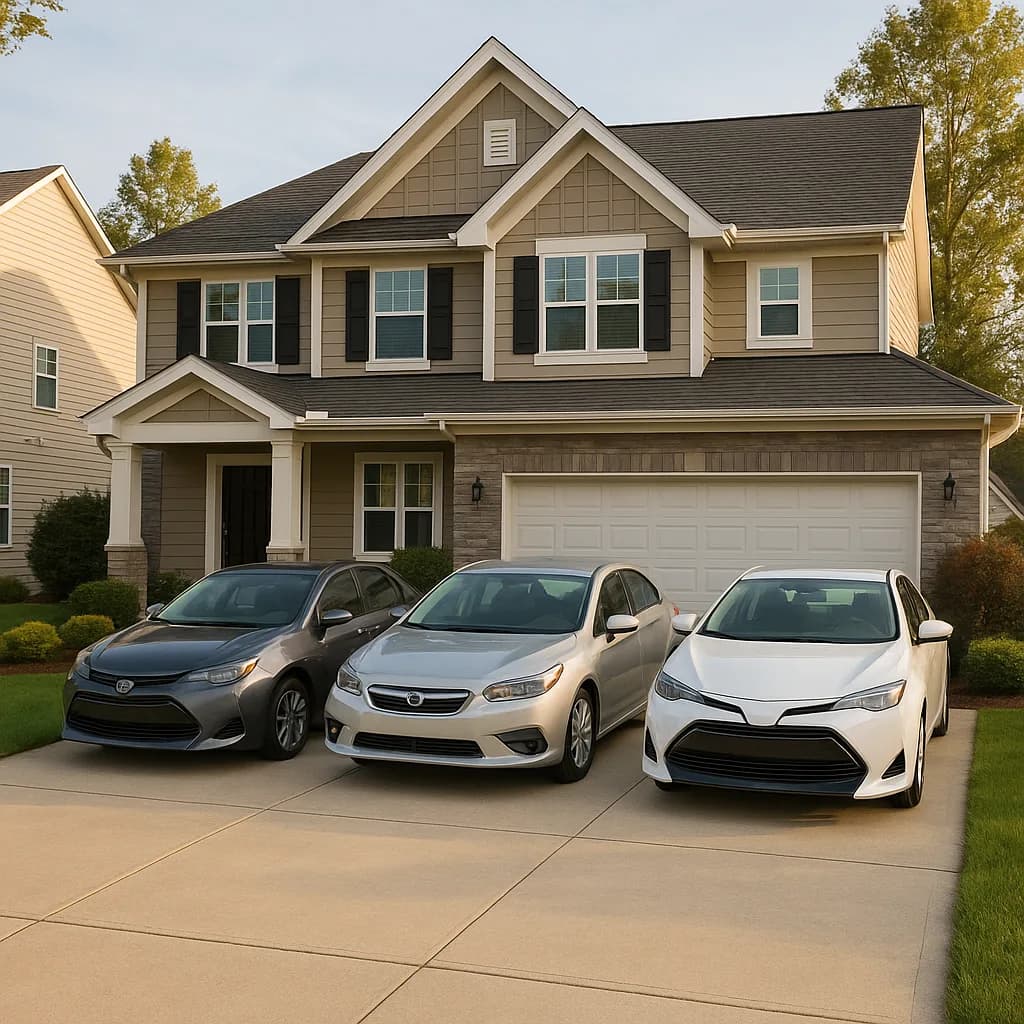
You own three vehicles. It does not. Rental reimbursement is a per-occurrence coverage: one claim, one rental car, one daily limit, regardless of how many vehicles sit on the policy.
This article clarifies how rental coverage actually works on a Tennessee multi-car policy, what per-occurrence means in practice, and whether households with backup vehicles need it at all. The structural reality: you are buying the same coverage multiple times, but only one application per claim ever pays.
Compare car insurance rates in your state
Get quotes from licensed carriers — no obligation, no spam, results in minutes.
Get Your Free QuoteTennessee Minimum Liability
$25,000 / $50,000 / $25,000
Tennessee requires $25,000 bodily injury per person, $50,000 per accident, and $25,000 property damage. Rental coverage is optional and sits outside these minimums, but understanding base requirements helps frame the optional-coverage decision.
Tennessee Department of Safety and Homeland Security
How Rental Coverage Works on a Multi-Car Policy
The coverage attaches to each vehicle on the policy, but it triggers per occurrence, not per vehicle. One collision claim on one car opens one rental period. If a second car on the same policy is damaged in the same incident, the same rental period covers both—you do not get two simultaneous rentals.
The coverage does not multiply by the number of vehicles you own.
Carriers in Tennessee writing multi-car policies—Progressive, State Farm, GEICO, Allstate, Nationwide, and others—all structure rental coverage this way. The line item appears per vehicle on your declarations page, but the payout is per claim, not per car.
Rental coverage on three cars does not mean three rentals. It means one rental per claim, billed three times on your premium.
When Backup Vehicles Eliminate the Need

If you own three vehicles and two drivers live in the household, losing one car to a claim leaves two operational. Rental coverage in that scenario pays for convenience—avoiding the coordination cost of sharing the remaining cars—but it does not pay for necessity.
The calculus shifts when all vehicles serve distinct, non-interchangeable roles: one driver commutes 60 miles daily in a sedan, another hauls equipment in a truck, and a third vehicle stays parked most of the week. Losing the commuter car means the truck does not substitute well, and rental coverage becomes the gap-filler. Households where every car has a dedicated driver or a dedicated function see more value from the coverage than households with surplus vehicles sitting idle.
Related Articles



The Per-Vehicle Premium vs. Per-Claim Payout Gap
Tennessee carriers charge rental coverage per vehicle. A policy insuring two cars pays twice; a policy insuring four pays four times.
That structure creates a mismatch: you pay for four vehicles but collect for one occurrence. The redundancy makes sense to the carrier—each vehicle can trigger a separate claim in separate incidents—but it rarely makes sense to the policyholder, because simultaneous unrelated claims affecting multiple household vehicles are statistically uncommon. Most households file zero or one rental-triggering claim per year.
The alternative: drop rental coverage on all but one vehicle, or drop it entirely and self-insure the rental cost. Households that have not filed a collision or comprehensive claim in three years come out ahead by skipping the coverage.
Tennessee Uninsured Motorist Rate
21.3%
More than one in five Tennessee drivers carries no insurance. Uninsured-motorist coverage protects your household when an at-fault driver cannot pay, but it does not trigger rental reimbursement unless your policy includes collision coverage and the claim qualifies.
Insurance Research Council, 2023
Structuring Rental Coverage Across Multiple Vehicles
If rental coverage makes sense for your household, buy it on the vehicle most likely to need it: the highest-mileage car, the newest financed vehicle with a loan-required comprehensive and collision package, or the car driven by the household member with the longest commute. Skip it on the rarely-driven third car, the older paid-off vehicle you keep for backup, and any car garaged at a second address where another household vehicle is not available.
Some Tennessee carriers let you select different rental limits per vehicle on the same policy. That approach reduces premium waste while preserving coverage where it is most useful. Confirm with your carrier whether per-vehicle selection is available—some require uniform limits across all vehicles on the policy.
Compare Rental Coverage as Part of the Full Policy
Rental reimbursement is one line item in a multi-car policy that also includes liability limits, collision and comprehensive deductibles, uninsured-motorist coverage, and the multi-car discount. Carriers writing Tennessee multi-car policies—Progressive, State Farm, GEICO, Farmers, Allstate, Liberty Mutual, Nationwide—price these components differently. A carrier offering a lower base rate but charging more for rental coverage may still cost less overall than a competitor with cheaper rental add-ons but a higher liability premium.
Request quotes with and without rental coverage on each vehicle. Compare the annual difference against your household's claim history and transportation redundancy. Use Tennessee-specific comparison tools that let you toggle optional coverages and see the per-vehicle and total-policy impact on premium.