
The Multi-Vehicle Coverage Decision Tennessee Households Face
You own two or three vehicles, and you're trying to decide whether to carry Tennessee's minimum liability on all of them or add collision and comprehensive to some or all. The question isn't academic—your household's total premium, your out-of-pocket risk at claim time, and the way your multi-car discount applies all hinge on this choice.
Most coverage advice assumes a single vehicle. When you're insuring multiple cars on one policy, the decision becomes structural: do you carry uniform coverage across every vehicle, or do you split levels—minimum liability on the older car, full coverage on the newer one? Tennessee's $25,000 per person / $50,000 per accident / $25,000 property damage liability minimum is the floor, but it doesn't tell you how to structure protection across a household fleet.
Compare car insurance rates in your state
Get quotes from licensed carriers — no obligation, no spam, results in minutes.
Get Your Free QuoteTennessee Liability Minimum
$25,000 / $50,000 / $25,000
Tennessee law requires every registered vehicle to carry at least $25,000 bodily injury per person, $50,000 bodily injury per accident, and $25,000 property damage. This is the minimum to register and legally drive—not a recommendation of adequate protection.
Tennessee Department of Safety and Homeland Security
What Liability-Only and Full Coverage Actually Mean on a Multi-Car Policy
Liability-only means you carry Tennessee's minimum required coverages—bodily injury and property damage liability—and nothing else. If your vehicle is damaged in an at-fault accident, stolen, or totaled by hail, you pay the repair or replacement cost yourself. Liability protects the other driver; it does not protect your car.
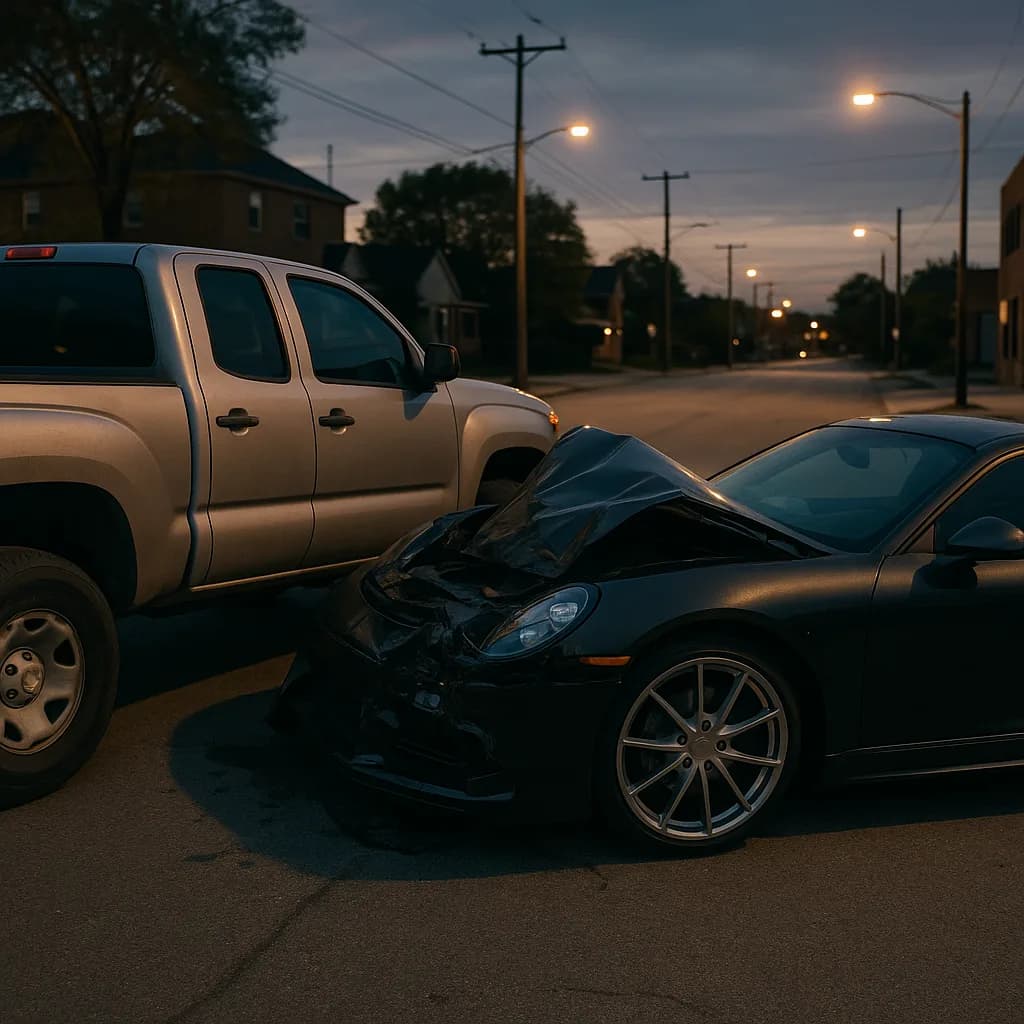
Full coverage is not a product name. It's shorthand for a policy that adds collision and comprehensive to the liability base. Collision pays to repair or replace your vehicle after an at-fault accident or a crash with an object. Comprehensive covers theft, vandalism, weather damage, and animal strikes. Together, they protect your vehicle's value; liability alone does not.
When you insure multiple vehicles on one policy, you choose coverage levels per vehicle. You can carry liability-only on one car and full coverage on another. The policy prices each vehicle separately based on its coverage selection, then applies the multi-car discount to the combined premium. The discount applies to the total, but the coverage structure is per-vehicle.
The multi-car discount applies to your total premium, but collision and comprehensive are priced per vehicle. Splitting coverage levels across cars changes the discount base, not the discount itself.
How Households Structure Coverage Across Multiple Vehicles

Uniform full coverage across all vehicles: every car on the policy carries liability, collision, and comprehensive. This structure maximizes protection and simplifies claims—you're covered for damage to any vehicle in the household, regardless of fault. The downside is cost: you're paying collision and comprehensive premiums on every car, including older vehicles whose replacement value may not justify the expense. Households choose this structure when every vehicle is worth protecting, when the budget supports it, or when financing requires full coverage on multiple cars.
Split coverage by vehicle value: full coverage on newer or financed vehicles, liability-only on older paid-off cars. This is the most common structure for multi-car households. You protect the vehicles whose loss would hurt financially, and you drop collision and comprehensive on the car whose replacement cost you could absorb. The premium drops significantly compared to uniform full coverage, but you're self-insuring the older vehicle's physical damage risk. The multi-car discount still applies to the total premium—you're not penalized for mixing coverage levels.
Related Articles





When Liability-Only Makes Sense and When It Doesn't
Liability-only makes sense on a vehicle whose replacement cost is low enough that you could pay it out of pocket without financial strain. The rule of thumb: if the vehicle's current market value is less than ten times the annual cost of collision and comprehensive coverage, you're better off dropping those coverages and self-insuring.
Liability-only does not make sense on a financed or leased vehicle. Lenders require collision and comprehensive because the vehicle secures the loan. If you drop those coverages, the lender will force-place insurance at a much higher cost, or they'll repossess. Liability-only also doesn't make sense on a vehicle you cannot afford to replace. If losing the car would leave you unable to get to work or meet household obligations, the risk is too high—carry full coverage.
On a multi-car policy, the decision is per vehicle. You might carry full coverage on the two newer cars and liability-only on the 15-year-old sedan. The policy prices each vehicle's coverage separately, applies the multi-car discount to the total, and you pay one combined premium. Mixing coverage levels is standard practice and does not affect your discount eligibility.
Tennessee Uninsured Motorist Rate
21.3%
More than one in five Tennessee drivers carries no insurance. That rate is well above the national average and means your household faces significant exposure to uninsured-motorist claims. Uninsured motorist coverage is optional in Tennessee, but it's the only protection when an at-fault driver has no policy.
Insurance Research Council, 2023
How the Multi-Car Discount Interacts With Coverage Levels
The multi-car discount applies to your total premium after each vehicle's coverage is priced individually. Carriers calculate the premium for each car based on its coverage selections, driver assignments, and risk factors, then sum those premiums and apply the multi-car discount to the total. The discount percentage does not change based on whether you carry uniform or split coverage—it's a function of having multiple vehicles on one policy, not the coverage levels you choose.
What does change is the base premium the discount applies to. The multi-car discount then applies to a lower total, so your absolute dollar savings from the discount will be smaller. But your out-of-pocket premium is still lower overall, because you've removed a large cost component. The discount doesn't penalize you for mixing coverage levels; it just discounts whatever total you land on.
Compare Carriers That Write Multi-Vehicle Policies in Tennessee
Tennessee households insuring multiple vehicles have access to 25 carriers writing multi-car policies in the state, including State Farm, GEICO, Progressive, Allstate, Nationwide, and Farmers. Each carrier prices collision, comprehensive, and liability differently, and each applies its own multi-car discount structure. The carrier that offers the lowest premium for liability-only on three vehicles may not be the lowest for full coverage on two and liability-only on one—rate differences compound across coverage levels and vehicle counts.
Request quotes from at least three carriers, specifying the exact coverage structure you're considering: which vehicles carry full coverage, which carry liability-only, and what deductibles you want on collision and comprehensive. Compare the total premium after the multi-car discount is applied. The goal is to find the carrier whose pricing structure aligns with your household's vehicle mix and coverage decisions. Carriers that specialize in multi-vehicle households often price split-coverage structures more competitively than carriers built for single-car policies.