
When Gap Applies to Some Vehicles But Not Others
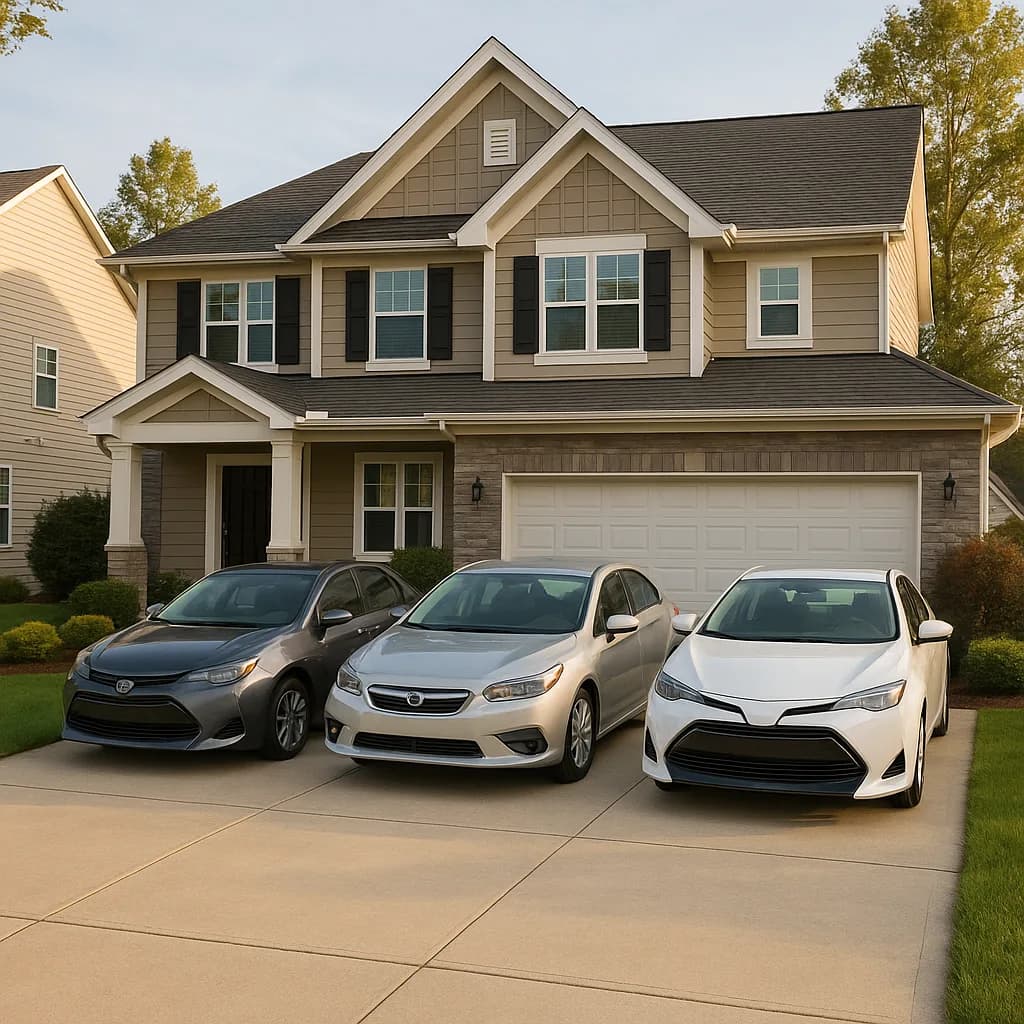
You financed a third car and added it to your Tennessee policy. The lender requires collision and comprehensive, which you already carry on the other two vehicles. Then the finance officer mentioned gap insurance—coverage that pays the difference between what your car is worth and what you still owe if it's totaled. You said yes because it sounded necessary, but now you're looking at your policy and wondering whether all three cars need gap, or just the newest one.
Gap insurance is vehicle-specific, not policy-wide. A multi-car policy in Tennessee can carry gap on one vehicle and skip it on the others. The question is which cars actually need it—and the answer depends on each vehicle's loan balance, current value, and how fast it's depreciating.
Compare car insurance rates in your state
Get quotes from licensed carriers — no obligation, no spam, results in minutes.
Get Your Free QuoteTennessee Minimum Liability
$25,000 / $50,000 / $25,000
Tennessee requires $25,000 bodily injury per person, $50,000 per accident, and $25,000 property damage. Gap insurance sits on top of collision coverage, which is optional—but lenders require it when you finance.
Tennessee Department of Safety, Driver Services
What Gap Insurance Actually Covers
Gap insurance pays the difference between your car's actual cash value at the time of total loss and the remaining loan balance. Collision or comprehensive pays the car's depreciated market value; gap covers the shortfall between that payout and what you owe the lender. Without gap, you're responsible for the remaining loan balance even after the car is gone.
Gap applies only when the loan balance exceeds the car's value—a condition called being "upside down" on the loan. New cars depreciate fastest in the first two years, so gap matters most early in the loan term.
Tennessee carriers sell gap as an optional add-on to collision and comprehensive. Some lenders bundle gap into the finance contract at a higher cost; buying it through your auto policy is typically cheaper and can be canceled once the loan balance drops below the car's value.
Gap is not required by Tennessee law—lenders require collision and comprehensive, but gap is optional. You decide which vehicles need it based on loan balance and depreciation.
Which Vehicles on Your Policy Need Gap

New cars lose 20–30% of their value in the first year, so a vehicle financed with a small down payment will be upside down immediately. A three-year-old car refinanced at a low balance may never fall upside down. Check each vehicle's loan balance against its current trade-in value using Kelley Blue Book or NADA; if the loan is higher, gap makes sense.
On a multi-car Tennessee policy, you can carry gap on the newest financed vehicle and skip it on older cars with low balances or paid-off vehicles. The sedan's loan balance is close to its value, and the truck has no loan. Paying for gap on all three wastes premium on vehicles that don't need it.
Related Articles





How Depreciation Timing Changes the Answer
Gap is a temporary coverage. As you pay down the loan and the car depreciates more slowly, the gap between loan balance and value narrows. Most vehicles reach a break-even point—where the loan balance drops below the car's value—within two to three years if you made a reasonable down payment and aren't financing negative equity from a trade-in.
Review each vehicle's gap need annually at renewal. A car that needed gap when you bought it may not need it two years later. Carriers let you drop gap mid-term once the loan balance falls below the car's value; you're not locked in for the life of the loan. Keeping gap on a car that's no longer upside down is paying for coverage that can't trigger a claim.
Leased vehicles are a special case. Most lease contracts include gap coverage automatically because the lessee is responsible for the difference between the car's value and the lease payoff if it's totaled. Check your lease agreement before adding gap through your Tennessee auto policy—you may already have it through the leasing company.
Tennessee Uninsured Motorist Rate
21.3%
More than one in five Tennessee drivers carries no insurance. If an uninsured driver totals your financed car, your collision coverage pays the car's value—but gap covers the loan shortfall, protecting you from paying off a destroyed vehicle.
Insurance Information Institute, 2023
Structuring Gap Across a Multi-Car Policy
Adding gap to one vehicle doesn't change the premium on the others. You select gap coverage vehicle-by-vehicle when you add or renew each car on the policy.
When you add a newly financed car to an existing Tennessee multi-car policy, the carrier will ask whether you want gap on that vehicle. If you're replacing an older car that had gap, the old vehicle's gap coverage doesn't transfer—you're starting fresh with the new car. If the new car is financed with a small down payment, add gap. If it's paid off or you put 30% down, skip it.
Compare Carriers That Write Multi-Car Policies in Tennessee
Not every Tennessee carrier offers gap insurance, and pricing varies. Geico, Progressive, State Farm, and Nationwide sell gap as a policy add-on; some non-standard carriers don't offer it at all. When you're structuring coverage for multiple vehicles, confirm that the carrier you're comparing writes gap and ask for a quote with and without it on each financed car.
Use the comparison tool on this site to see which Tennessee carriers write multi-car policies and offer gap coverage. Enter each vehicle's year, make, and loan status separately—the tool will show you per-vehicle pricing and let you toggle gap on or off for each car. That gives you the clearest picture of what you're actually paying for coverage that fits your household's loan positions.