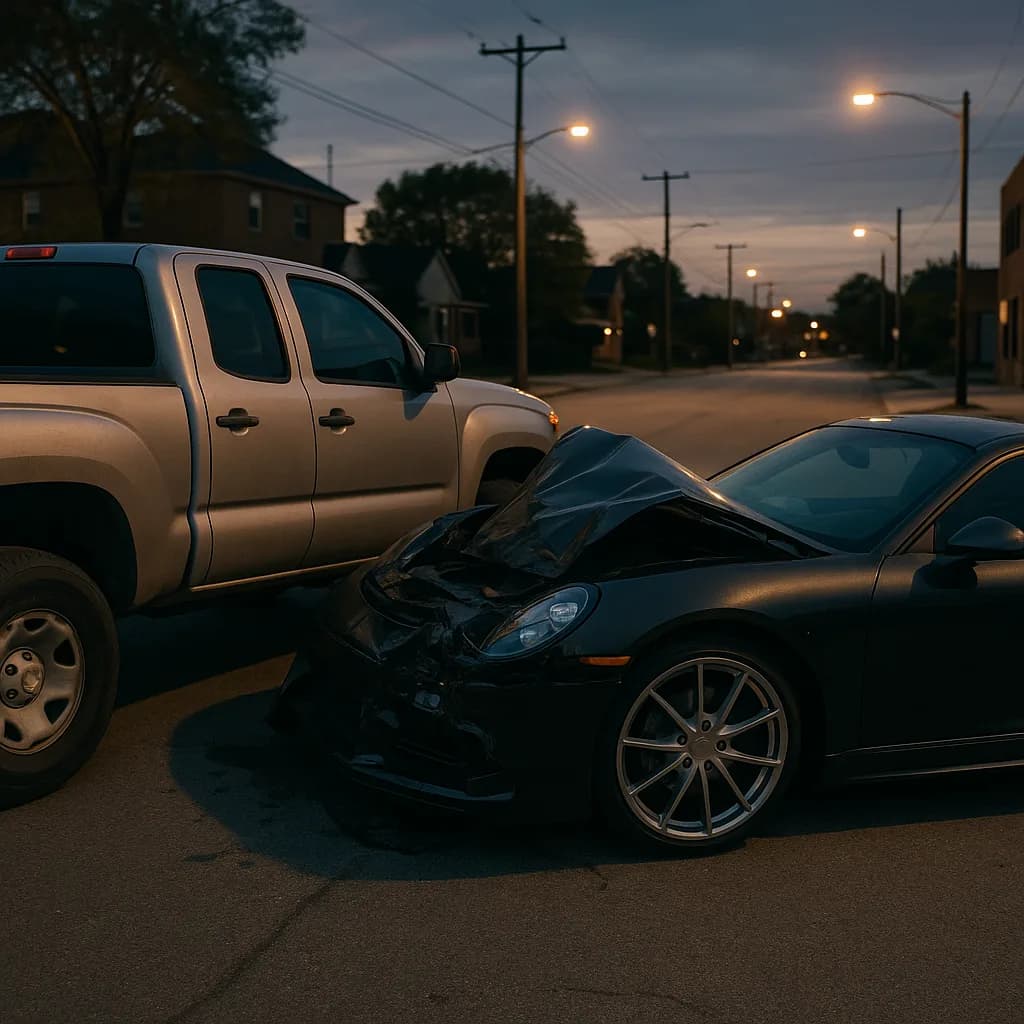
The Question Every Multi-Car Household Asks
You own two or more vehicles in Tennessee, and you're looking at your policy wondering whether the state's $25,000/$50,000/$25,000 minimum liability is enough, or whether you need full coverage on every car. The question feels binary — minimum or full — but the structural reality is that most multi-car households don't need the same coverage on every vehicle.
Tennessee minimum liability covers damage you cause to others: $25,000 per person for bodily injury, $50,000 per accident, and $25,000 for property damage. It does not cover your own vehicle. Full coverage adds collision (damage to your car in a crash) and comprehensive (theft, weather, vandalism). The decision isn't one-size-fits-all — it's vehicle-by-vehicle, based on value, use, and what you can afford to replace out of pocket.
Compare car insurance rates in your state
Get quotes from licensed carriers — no obligation, no spam, results in minutes.
Get Your Free QuoteTennessee Minimum Liability
$25,000 / $50,000 / $25,000
This is the floor: $25,000 per person for bodily injury, $50,000 per accident, $25,000 for property damage. It covers the other driver's costs, not yours.
Tennessee Department of Safety and Homeland Security
What Minimum Liability Actually Covers
Tennessee's minimum liability pays for damage you cause to someone else — their medical bills, their car repair, their lost wages. If two people in the other car are injured, the per-accident cap of $50,000 applies across both.
Minimum liability does not pay to repair or replace your own vehicle. If your car is totaled in a crash you caused, you receive nothing from your liability policy. If your car is stolen, vandalized, or damaged by hail, minimum liability does not cover it. The coverage exists to protect others from your driving, not to protect your own assets.
For a household with one older vehicle worth less than the cost of a year's full coverage, minimum liability can make sense — the vehicle's replacement cost is low enough that self-insuring is rational. For a household with two or more vehicles, the calculation changes. You're not choosing between minimum and full for the household; you're choosing per vehicle based on what each car is worth and how much risk you're willing to carry.
Minimum liability leaves every vehicle you own uninsured. If you finance or lease any car, the lender requires collision and comprehensive — minimum liability does not satisfy the loan.
What Full Coverage Adds

Collision pays to repair or replace your car after a crash, regardless of fault. If you hit another car, a guardrail, or roll your vehicle, collision covers your repair bill minus your deductible. Comprehensive pays for non-crash damage: theft, vandalism, fire, flood, hail, hitting a deer. Both coverages are optional under Tennessee law, but required by lenders if you finance or lease.
The cost of adding collision and comprehensive depends on your vehicle's value, your deductible choice, and your driving record. A $500 deductible costs more per month than a $1,000 deductible, but you pay less out of pocket at claim time.
Related Articles



The Multi-Car Coverage Strategy
Most Tennessee households with two or more vehicles do not carry the same coverage on every car. The newer financed vehicle carries full coverage because the lender requires it. The older paid-off vehicle carries minimum liability because its replacement cost is low and the household can absorb the loss if it's totaled. This is not corner-cutting — it's rational risk allocation.
The multi-car discount applies when every vehicle sits on the same policy, but the discount does not require identical coverage on every car. You can carry full coverage on one vehicle and minimum liability on another, and still receive the multi-car discount. The policy treats each vehicle as a separate coverage unit. Carriers re-rate the entire policy when you add or remove a vehicle, but the coverage levels remain independent per car.
A common failure mode: a household adds a third vehicle mid-term, selects minimum liability to keep the premium low, then discovers at claim time that the vehicle was worth more than they thought and they're now replacing it out of pocket. The time to decide coverage level is at purchase, not after a total loss. If the vehicle's value exceeds what you can comfortably replace in cash, full coverage is the correct choice regardless of how many other cars you own.
Tennessee Uninsured Motorist Rate
21.3%
More than one in five Tennessee drivers carries no insurance. Uninsured motorist coverage protects you when an at-fault driver cannot pay — it's optional but critical in a state with this uninsured rate.
Insurance Research Council, 2023
The Uninsured Motorist Question
Tennessee does not require uninsured motorist coverage, but 21.3% of Tennessee drivers carry no insurance. If an uninsured driver totals your car, their liability policy does not exist. Your collision coverage pays to replace your vehicle, but only if you carry it. If you carry only minimum liability, you have no collision coverage, and the uninsured driver has no liability policy — you're replacing the car out of pocket.
Uninsured motorist property damage (UMPD) is an optional coverage that pays for vehicle damage caused by an uninsured or hit-and-run driver. It costs less than collision but covers a narrower set of scenarios — only crashes caused by another driver, not single-vehicle crashes or non-crash events. For a household carrying minimum liability on an older vehicle, adding UMPD can make sense as a middle ground: you're still self-insuring for your own at-fault crashes, but you're protected if someone else totals your car and has no insurance.
When to Carry Full Coverage on Every Vehicle
If every vehicle in your household is financed, leased, or worth more than you can replace in cash, full coverage on every car is the correct choice. The lender requires it for financed vehicles, and the replacement-cost math supports it for high-value paid-off vehicles. The multi-car discount lowers the combined premium, but the discount does not change the per-vehicle coverage decision — it only makes the total policy cheaper than insuring each car separately.
If one or more vehicles are older, paid off, and worth less than two years of full-coverage premiums, minimum liability on those vehicles is rational. You're self-insuring the vehicle's replacement cost in exchange for lower monthly premiums. The risk is that the vehicle is totaled and you pay to replace it out of pocket. If that cost is manageable, the strategy works. If it's not, full coverage is the safer choice even on an older car.
Compare Carriers and Coverage Levels Now
The decision between minimum and full coverage is vehicle-specific, not household-wide. Tennessee's minimum liability is $25,000/$50,000/$25,000 — it covers others, not your own cars. Full coverage adds collision and comprehensive to protect your vehicles. Most multi-car households carry full coverage on newer or financed vehicles and minimum liability on older paid-off cars. The multi-car discount applies regardless of coverage mix, as long as every vehicle sits on the same policy. Compare carriers that write Tennessee multi-car policies, quote both minimum and full coverage per vehicle, and choose the coverage level that matches each car's value and your household's risk tolerance.