
What Tennessee Law Actually Requires
Tennessee law requires liability insurance on every registered vehicle. The minimum limits are $25,000 per person for bodily injury, $50,000 per accident for bodily injury, and $25,000 per accident for property damage. These three numbers — written as 25/50/25 — are the only coverage the state mandates. Collision, comprehensive, uninsured motorist, and personal injury protection are optional under Tennessee law.
The confusion comes from lenders. If you finance or lease a vehicle, your lender will require collision and comprehensive coverage to protect their interest in the car. That requirement comes from your loan contract, not from Tennessee statute. Once the vehicle is paid off, you can drop collision and comprehensive and still meet state law with liability-only coverage.
Compare car insurance rates in your state
Get quotes from licensed carriers — no obligation, no spam, results in minutes.
Get Your Free QuoteTennessee Liability Minimum
25/50/25
Tennessee Code Annotated § 55-12-139 sets the minimum at $25,000 per person for bodily injury, $50,000 per accident for bodily injury, and $25,000 per accident for property damage. Carrying less than these limits makes your registration invalid.
Tennessee Code Annotated § 55-12-139
Liability Coverage Explained
Liability coverage pays for damage you cause to other people and their property. The $25,000 per person limit covers medical bills, lost wages, and pain and suffering for one injured person. The $50,000 per accident limit is the maximum your policy pays for all bodily injury claims from one crash, no matter how many people are hurt. The $25,000 property damage limit covers the other driver's vehicle, fences, buildings, or anything else you hit.
Liability does not pay for your own injuries or vehicle damage. If you cause a crash and total your car, liability pays to fix the other driver's car but leaves you with the repair bill for your own. That gap is why many drivers add collision coverage even after the lender no longer requires it.
Tennessee does not require uninsured motorist coverage, but carriers must offer it and you must reject it in writing if you do not want it. Given that 21.3% of Tennessee drivers are uninsured, many households accept the uninsured motorist coverage to protect against hit-and-run crashes and drivers who carry no insurance.
Liability-only coverage meets Tennessee law but leaves you unprotected if you cause a crash and damage your own vehicle.
What Happens When You Carry Only the Minimum
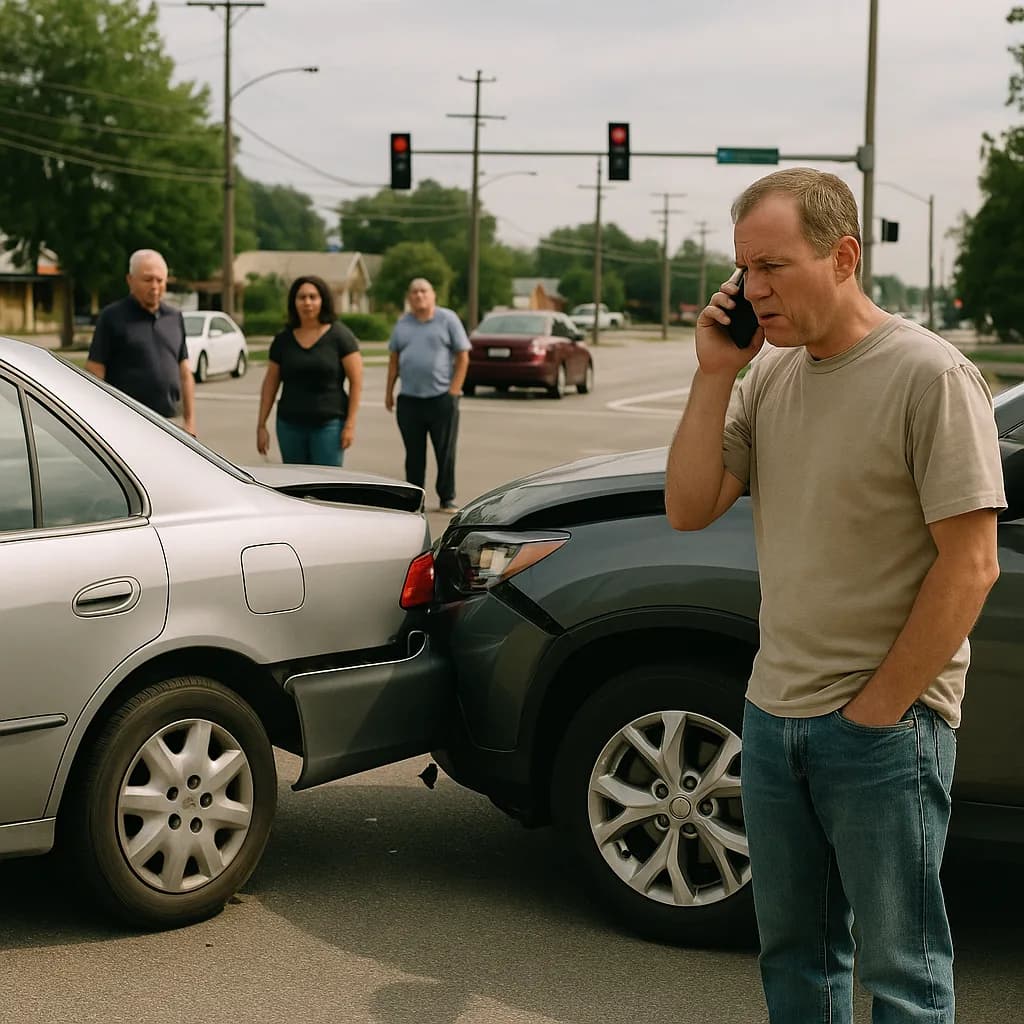
If you cause a crash that injures two people and each person's medical bills exceed $25,000, your policy pays only $25,000 per person up to the $50,000 per-accident cap. You are personally liable for every dollar above that limit. Tennessee allows injured parties to sue you for the difference, and a judgment can attach to your wages, bank accounts, and future assets. The minimum limits protect you in minor crashes but fail quickly in serious ones.
The property damage minimum of $25,000 also runs out fast. A totaled pickup truck or SUV can exceed that limit before you add towing, rental car costs, and damage to roadside property. If you hit a luxury vehicle or cause a multi-car pileup, the $25,000 property damage limit will not cover the full claim. Many drivers increase liability limits to 50/100/50 or 100/300/100 to avoid personal exposure, and the added premium is typically modest compared to the protection gained.
Related Articles


Collision and Comprehensive Are Optional
Collision coverage pays to repair or replace your vehicle after a crash, regardless of who caused it. Comprehensive coverage pays for theft, vandalism, hail, flood, fire, and animal strikes. Neither is required by Tennessee law. If you own your vehicle outright and can afford to replace it out of pocket, you can legally drive with liability-only coverage.
The decision to drop collision and comprehensive depends on your vehicle's value and your financial cushion. Many drivers drop both once the vehicle's value falls below a threshold where self-insuring makes sense.
If you finance or lease, your lender controls this decision. The loan contract requires collision and comprehensive until the loan is paid off. Once you own the vehicle free and clear, you can drop both coverages and still meet Tennessee's legal requirement with liability only.
Tennessee Uninsured Motorist Rate
21.3%
More than one in five Tennessee drivers carries no insurance. Uninsured motorist coverage protects you when an at-fault driver has no policy to pay your claim. Tennessee law requires carriers to offer it, and you must reject it in writing.
Insurance Information Institute, 2023
Proof of Insurance and Enforcement
Tennessee requires you to carry proof of insurance whenever you drive. Acceptable proof includes a paper insurance card, an electronic display on your phone, or a digital ID card from your carrier's app. Law enforcement can verify coverage electronically through the state's database, but you must still present proof when stopped.
Driving without insurance is a Class C misdemeanor in Tennessee. The penalty includes a fine, suspension of your vehicle registration, and suspension of your driver license. The SR-22 is not insurance — it is a filing your carrier submits to the state proving you carry at least the minimum liability limits. Carriers charge a one-time filing fee, and the SR-22 requirement stays in effect for the full three-year period.
Compare Carriers That Write Tennessee Liability
Tennessee has a large carrier market, and liability-only premiums vary significantly by company. State Farm, GEICO, Progressive, Allstate, Farmers, Nationwide, and Liberty Mutual all write liability coverage in Tennessee. Non-standard carriers including Acceptance Insurance, Bristol West, Dairyland, Direct Auto, GAINSCO, and The General specialize in drivers who need liability-only policies or have a non-standard driving history.
When comparing carriers, confirm that the quote includes at least the 25/50/25 minimum. Some online quote tools default to higher limits, which increases the premium but also increases your protection. If you are adding a second or third vehicle to an existing policy, most carriers apply a multi-vehicle discount that reduces the per-vehicle cost. The discount requires every vehicle to sit on the same policy, and it typically ranges from a modest percentage to a more significant reduction depending on the carrier and the number of vehicles.