
When the Multi-Car Discount Doesn't Apply
You bought a second car, added it to your Tennessee policy, and expected the multi-car discount to lower your premium. Instead, the total went up more than you planned, or the discount didn't appear at all. The carrier told you the vehicles don't qualify, but you're insuring both cars with the same company.
The multi-car discount in Tennessee requires every vehicle to sit on one policy, typically garaged at the same address and titled to household members. A car titled to someone outside your household, garaged at a different address, or sitting on a separate policy — even with the same carrier — usually won't qualify. That structural requirement blocks more households than the discount's name suggests.
Compare car insurance rates in your state
Get quotes from licensed carriers — no obligation, no spam, results in minutes.
Get Your Free QuoteTennessee Minimum Liability
$25,000 / $50,000 / $25,000
Tennessee requires $25,000 bodily injury per person, $50,000 per accident, and $25,000 property damage. Every vehicle on your policy must meet these minimums, and adding a car re-rates the entire policy based on the new vehicle's risk profile.
Tennessee Department of Safety, Driver Services
What the Multi-Car Discount Actually Requires
The multi-car discount applies when you insure two or more vehicles on a single auto policy. Most Tennessee carriers require every vehicle to be garaged at the same address and titled to members of the same household. A vehicle titled to a roommate, an adult child living elsewhere, or a spouse with a different garaging address typically won't count toward the same-policy requirement.
Combining two existing policies after marriage or a household move can trigger the discount, but only if both drivers and all vehicles transfer to one policy. Keeping separate policies with the same carrier — even if you share an address — usually won't qualify. The discount applies to the policy, not to the carrier relationship.
When you add a vehicle mid-term, the carrier re-rates the entire policy rather than simply adding a flat amount. The new vehicle's year, make, model, and garaging ZIP code all affect the combined premium. A high-theft-risk vehicle or a car garaged in a higher-rate county can raise the total more than the multi-car discount lowers it.
A vehicle titled to someone outside your household or garaged at a different address blocks the multi-car discount, even when both policies are with the same carrier.
How Tennessee Carriers Structure Multi-Car Policies
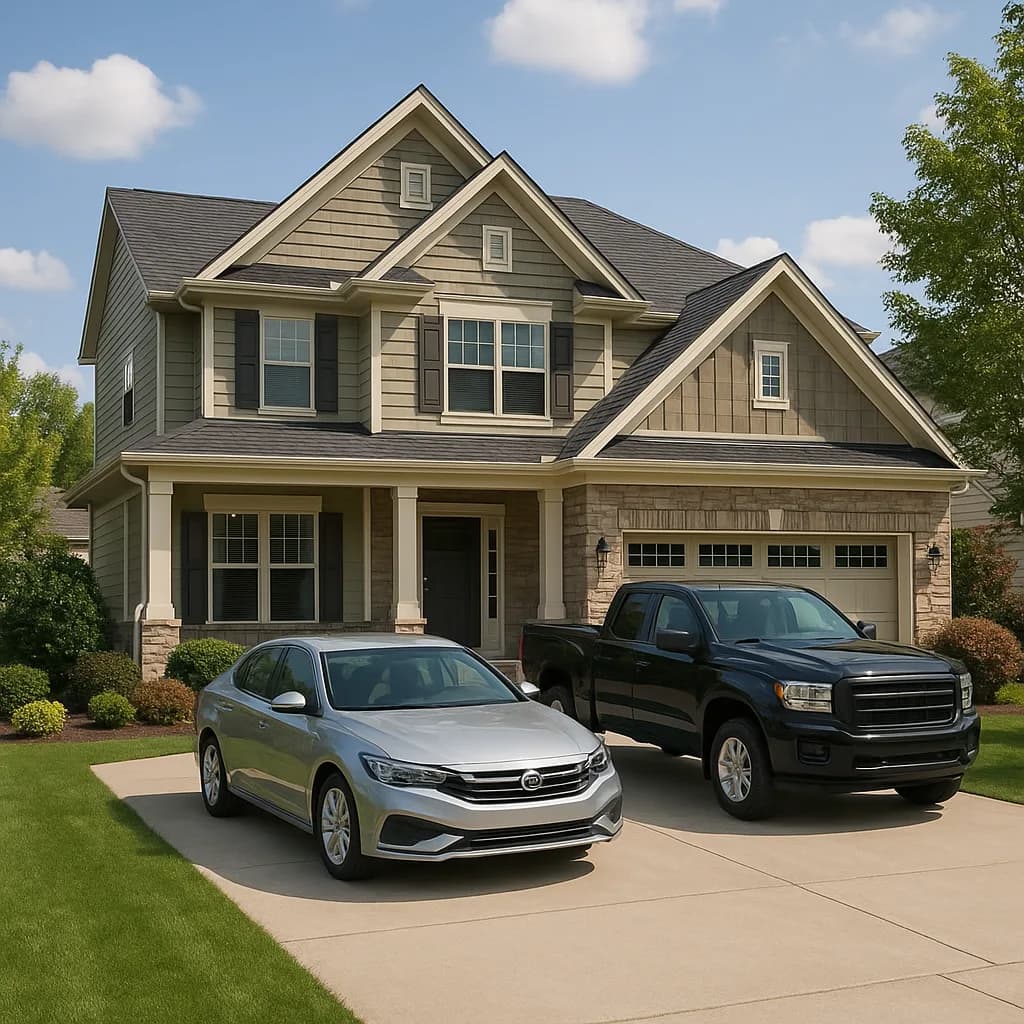
State Farm, GEICO, Progressive, Allstate, and Nationwide all write multi-car policies in Tennessee and apply the discount when every vehicle sits on one policy at the same garaging address. The discount typically reduces the premium for the second and subsequent vehicles, not the first. A household with three cars pays less per car than a household with two, but the first vehicle on the policy carries the full base rate.
Carriers verify garaging address and household composition at application and renewal. A vehicle titled to an adult child who moved out, a roommate with separate finances, or a spouse maintaining a separate residence won't qualify for the same-policy discount. Some carriers allow an exception for college students temporarily living away from home, but the vehicle must remain titled to a parent and listed as garaged at the family address.
Related Articles





When Combining Policies Costs More Than Expected
Combining two policies doesn't always lower the total premium. If one driver has a recent violation, a DUI, or multiple at-fault claims, merging policies can raise the combined rate above what the two separate policies cost. Tennessee carriers rate every driver on the policy against every vehicle, and the highest-risk driver affects the premium for all cars.
A newly-married couple combining policies often discovers this when one spouse has a clean record and the other has points or a recent ticket. The clean-record spouse's premium rises to reflect the household's combined risk, even if they never drive the other spouse's car. Some carriers offer a named-driver exclusion that removes a high-risk household member from coverage, preserving the lower rate for the remaining drivers, but the excluded driver cannot legally operate any vehicle on the policy.
Adding a teenage driver to a multi-car policy raises the premium more than adding a second vehicle alone. Tennessee carriers assume the teen will drive the highest-risk vehicle on the policy unless you assign them to a specific car and exclude them from the others. That assignment can lower the total increase, but not all carriers allow per-vehicle driver assignments.
Tennessee Uninsured Motorist Rate
21.3%
More than one in five Tennessee drivers operates without insurance. Uninsured motorist coverage protects you when an at-fault driver can't pay, and adding it to a multi-car policy costs less per vehicle than buying it separately for each car.
Insurance Information Institute, 2023
Structuring Coverage Across Multiple Vehicles
A multi-car policy in Tennessee must carry the state's minimum liability limits on every vehicle: $25,000 bodily injury per person, $50,000 per accident, and $25,000 property damage. You can structure higher limits and optional coverages differently across vehicles. A financed car requires collision and comprehensive; a paid-off older car with low market value may not need them.
Dropping collision and comprehensive on a low-value vehicle while keeping them on a financed car lowers the total premium without losing the multi-car discount. The discount applies as long as every vehicle sits on one policy, regardless of whether each car carries the same coverage levels. A household with a new SUV and a 15-year-old sedan can insure the SUV with full coverage and the sedan with liability only, and still receive the multi-car discount on both.
Compare Carriers Writing Multi-Car Policies in Tennessee
Tennessee households insuring two or more vehicles should compare carriers that write multi-car policies in the state. State Farm, GEICO, Progressive, Allstate, Nationwide, Farmers, Liberty Mutual, and Travelers all write multi-car coverage in Tennessee. Each carrier structures the discount differently: some apply a percentage reduction per vehicle, others reduce the base rate when multiple cars appear on the policy.
Request quotes from at least three carriers, providing the same vehicle details, garaging address, and driver information to each. The carrier offering the lowest rate for one vehicle may not offer the lowest rate for three. A smaller discount on a lower base rate can beat a larger discount on a higher one. Compare the total annual premium for all vehicles combined, not the per-vehicle rate or the discount percentage alone.