Tennessee Operates Under Fault-Based Liability
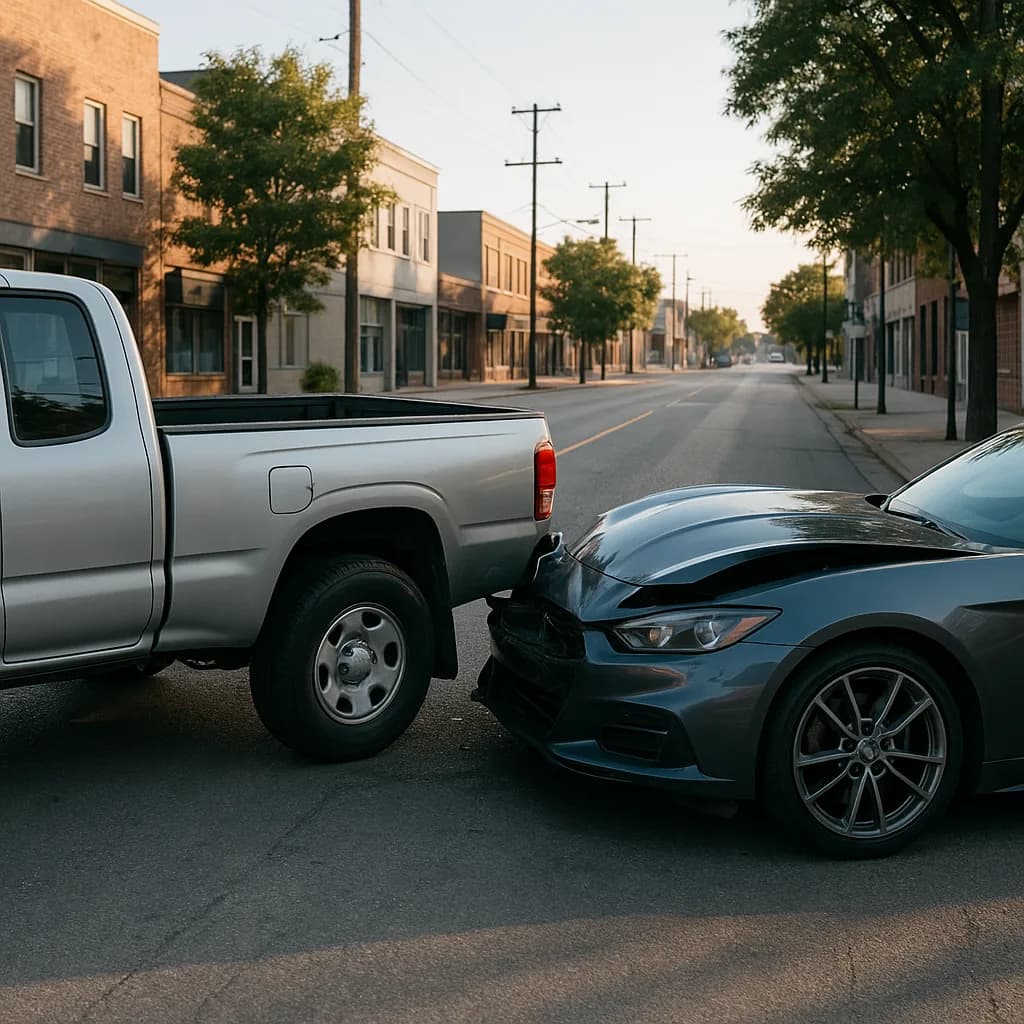
Tennessee is not a no-fault state. It operates under a traditional fault-based liability system where the driver who causes an accident is financially responsible for the other party's damages. The at-fault driver's bodily injury and property damage liability coverage pays for the injured party's medical bills, lost wages, vehicle repairs, and other losses. If you're moving from a no-fault state like Florida or Michigan, this is a fundamentally different claims process.
In Tennessee, you file a claim against the at-fault driver's insurance carrier, not your own. Your own collision and medical payments coverage can pay your damages regardless of fault, but those are optional coverages. The state does not require personal injury protection (PIP) coverage, and it does not mandate uninsured motorist coverage. The only mandatory coverages are bodily injury liability and property damage liability at the minimum limits Tennessee law specifies.
Compare car insurance rates in your state
Get quotes from licensed carriers — no obligation, no spam, results in minutes.
Get Your Free QuoteTennessee Minimum Liability Limits
$25,000 / $50,000 / $25,000
Tennessee requires $25,000 bodily injury per person, $50,000 bodily injury per accident, and $25,000 property damage per accident. These are the legal minimums to register and drive. Many households carrying multiple vehicles choose higher limits to protect household assets.
Tennessee Department of Safety and Homeland Security
What Fault-Based Liability Means for Your Household
In a fault state, the at-fault driver's liability coverage is the primary source of payment for the other party's damages. If you cause an accident, your bodily injury liability pays the other driver's medical bills and lost income up to your per-person and per-accident limits. Your property damage liability pays for their vehicle repairs and other property losses up to your property damage limit. If the damages exceed your limits, you are personally liable for the difference.
If another driver causes an accident and injures you or damages your vehicle, you file a claim against their liability coverage. If they carry only the state minimum limits and your damages exceed those limits, you can pursue the at-fault driver personally or tap your own uninsured/underinsured motorist coverage if you carry it. Tennessee does not require uninsured motorist coverage, but 21.3% of Tennessee drivers are uninsured as of 2023, so many households add it voluntarily.
When you insure multiple vehicles on one Tennessee policy, every vehicle on the policy shares the same liability limits unless you structure separate policies. A single at-fault accident involving one of your household's vehicles triggers the per-person and per-accident limits once, regardless of how many cars you own. Higher limits protect your household assets more effectively than minimum coverage when you own multiple vehicles or significant property.
Tennessee does not cap your financial responsibility at your liability limits. If damages exceed your coverage, you are personally liable for the balance.
How Claims Work in Tennessee's Fault System

After an accident in Tennessee, the at-fault driver's liability carrier investigates fault, evaluates the claim, and pays the injured party's damages up to the policy limits. The injured party can file a claim directly with the at-fault driver's carrier or file through their own carrier under their collision or uninsured motorist coverage if applicable. Fault determination can take days or weeks depending on the complexity of the accident, witness statements, and police reports. During that window, your own collision coverage (if you carry it) can pay for your vehicle repairs while your carrier pursues subrogation against the at-fault party.
If the at-fault driver is uninsured or underinsured, your uninsured motorist (UM) and underinsured motorist (UIM) coverage steps in to pay your medical bills and lost wages up to your UM/UIM limits. Tennessee does not require UM/UIM coverage, but given the 21.3% uninsured rate, many households carrying multiple vehicles add it. UM/UIM coverage applies per person and per accident, not per vehicle, so a single policy covering three vehicles provides the same UM/UIM protection as a policy covering one vehicle at the same limits.
Related Articles



Optional Coverages That Fill Gaps in Fault-Based Systems
Tennessee does not require collision, comprehensive, medical payments (MedPay), or uninsured motorist coverage, but these optional coverages protect you when the at-fault driver's liability coverage is insufficient or absent. Collision coverage pays for your vehicle repairs after an at-fault accident you cause or a not-at-fault accident where the other driver is uninsured. Comprehensive coverage pays for non-collision losses like theft, hail, or vandalism. MedPay covers your medical bills and those of your passengers regardless of fault, up to your MedPay limit, without requiring fault determination or a liability claim.
Uninsured motorist coverage pays your medical bills and lost wages when an uninsured driver injures you. Underinsured motorist coverage pays the gap when the at-fault driver's liability limits are too low to cover your damages. Both UM and UIM are structured as per-person and per-accident limits, mirroring liability coverage. A household policy covering multiple vehicles applies the same UM/UIM limits to every vehicle and every covered driver on the policy.
When you add a second or third vehicle to your Tennessee policy, the liability, UM/UIM, and MedPay limits apply to the entire policy, not per vehicle. Collision and comprehensive are priced per vehicle because they pay for physical damage to a specific car. A household with three vehicles on one policy pays three collision premiums (one per vehicle) but shares one set of liability and UM/UIM limits across all three vehicles and all household drivers.
Tennessee Uninsured Motorist Rate
21.3%
More than one in five Tennessee drivers operates without insurance. In a fault state, an uninsured at-fault driver leaves you with no liability coverage to claim against unless you carry your own uninsured motorist coverage.
Insurance Research Council, 2023
Structuring Liability Limits Across Multiple Vehicles
A household policy covering two or more vehicles in Tennessee applies one set of liability limits to every vehicle and every driver on the policy. The per-person limit ($50,000 in this example) is the maximum your carrier pays to any one injured person. The property damage limit ($50,000) is the maximum your carrier pays for all property damage in a single accident.
Households owning multiple vehicles often choose higher liability limits than the state minimum because a single at-fault accident can generate claims from multiple injured parties. The state minimum $25,000 per person is quickly exhausted in an accident with serious injuries. If you own a home, significant savings, or other assets, higher limits protect those assets from a judgment that exceeds your coverage.
Compare Tennessee Carriers Writing Fault-Based Liability
Tennessee licenses dozens of carriers writing fault-based liability coverage for households insuring multiple vehicles. Carriers on the Tennessee roster include State Farm, GEICO, Progressive, Allstate, Farmers, Nationwide, Liberty Mutual, Travelers, USAA, and many regional and non-standard carriers. Every carrier prices liability coverage differently based on your household's driving records, vehicle types, garaging address, and coverage selections. A household adding a second or third vehicle to an existing policy triggers a re-rate of the entire policy, not a flat per-vehicle add-on.
When you compare carriers, request quotes at the same liability limits so you're comparing equivalent coverage. Many households find that higher limits cost less per dollar of coverage than minimum limits because carriers price risk more favorably at higher coverage tiers. Use the site's comparison tool to request quotes from multiple Tennessee carriers at the liability limits that match your household's asset protection needs.