
What You Pay to Insure Multiple Vehicles in Tennessee
You own two or more vehicles, you need coverage that meets Tennessee's requirements on every car, and you want to understand what that actually costs before you commit to a policy structure. The state mandates $25,000 bodily injury per person, $50,000 bodily injury per accident, and $25,000 property damage — but those minimums are only the starting point for a household insuring multiple cars.
The cost depends on whether you put every vehicle on one policy to capture the multi-car discount, how many drivers in your household have access to those vehicles, where the cars are garaged, and whether you add optional uninsured-motorist coverage to protect against Tennessee's 21.3% uninsured-driver rate. This article walks the structural decisions that shape what you pay, the state-specific factors that move the number, and how to compare carriers that write multi-vehicle policies in Tennessee.
Compare car insurance rates in your state
Get quotes from licensed carriers — no obligation, no spam, results in minutes.
Get Your Free QuoteTennessee Average Annual Auto Expenditure
$936.15
Tennessee drivers spent an average of $936.15 per insured vehicle annually in 2023, according to NAIC data. That figure reflects all coverage levels and household structures statewide — your actual premium depends on the number of vehicles, drivers, coverage selections, and whether you structure coverage as one shared policy or separate policies per car.
NAIC Auto Insurance Database Report 2023
Tennessee Minimum Liability and What It Covers
Tennessee requires every registered vehicle to carry at minimum $25,000 bodily injury liability per person, $50,000 bodily injury liability per accident, and $25,000 property damage liability. Those limits pay for injury and property damage you cause to others — they do not cover your own vehicle or your own injuries. If you cause an accident that injures multiple people or totals an expensive vehicle, the minimum limits can be exhausted quickly, leaving you personally liable for the remainder.
The state does not mandate personal injury protection or uninsured-motorist coverage, but 21.3% of Tennessee drivers are uninsured. That means roughly one in five vehicles on the road carries no liability insurance at all. If an uninsured driver hits your car, your minimum-liability-only policy pays nothing for your vehicle damage or your medical bills — you would file against the at-fault driver personally, and most uninsured drivers lack assets to collect against.
Optional uninsured-motorist coverage fills that gap. It pays for your injuries and, depending on the policy, your vehicle damage when an uninsured or underinsured driver is at fault. Adding uninsured-motorist coverage to a multi-car policy raises the premium, but it removes the risk of a total loss with no recovery path. The decision is structural: do you accept the one-in-five uninsured-driver risk, or do you pay to transfer it to the carrier?
Tennessee does not require uninsured-motorist coverage, but 21.3% of drivers carry no insurance — the highest uninsured rate shapes whether optional UM coverage is worth the added premium.
Multi-Car Policy Structure and the Discount Mechanic
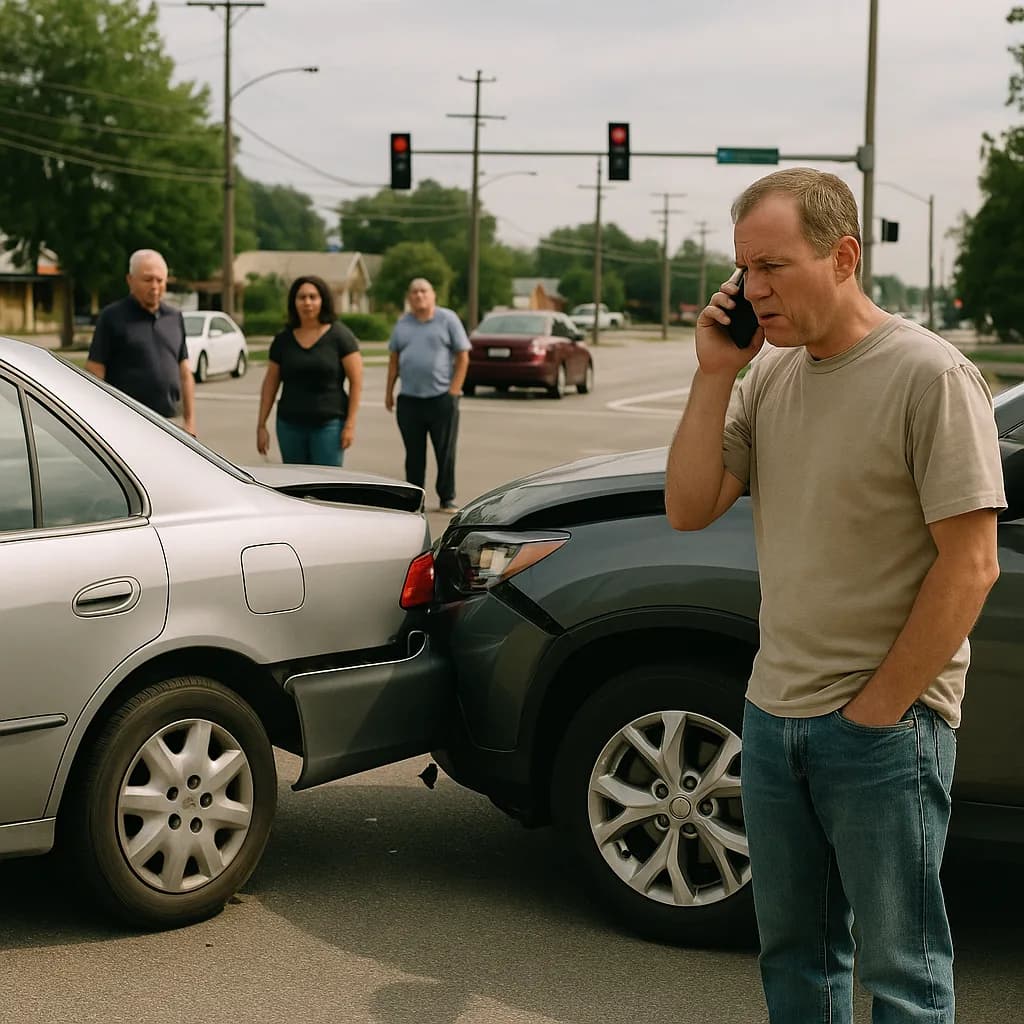
Most carriers require every vehicle to sit on one policy to qualify for the multi-car discount. If you own three cars but insure two on one policy and one on a separate policy, the separate policy does not receive the discount. The discount applies to the policy, not to individual vehicles, and the savings typically increase as you add more cars — a three-car policy often receives a larger discount than a two-car policy. Carriers calculate the discount differently: some reduce the premium on every vehicle after the first, others reduce the total policy premium by a percentage. The structure matters because a smaller discount on a lower base rate can produce a lower total premium than a larger discount on a higher base rate.
Combining two existing policies — for example, after marriage or when a household member moves in with a car — usually lowers the combined premium compared to maintaining two separate policies, but not always. If one driver carries a high-risk profile or a recent violation, adding that driver and vehicle to a clean policy can raise the premium more than the multi-car discount offsets. The only way to know is to compare the combined-policy quote against the sum of the two separate premiums. Carriers writing multi-vehicle policies in Tennessee include State Farm, Geico, Progressive, Allstate, Nationwide, Farmers, USAA, Liberty Mutual, Travelers, and others — the carrier roster varies by county, and not every carrier offers the same multi-car discount structure.
Related Articles






What Moves the Premium on a Multi-Vehicle Policy
Adding a second or third vehicle to an existing policy does not simply append a flat per-vehicle charge — the carrier re-rates the entire policy. The new vehicle's year, make, model, garaging ZIP code, annual mileage, and the drivers who have access to it all feed into the recalculated premium. A newer vehicle with comprehensive and collision coverage costs more to add than an older vehicle insured for liability only. A vehicle garaged in a high-theft-rate county costs more than the same vehicle garaged in a rural county with lower claim frequency.
Driver assignment matters. If the new vehicle is driven primarily by a household member with a clean record, the impact is smaller than if it is driven by a teen or a driver with recent violations. Tennessee allows carriers to use credit-based insurance scores, so a household's credit profile influences the base rate before the multi-car discount applies. The state recorded 1.59 traffic fatalities per 100 million vehicle miles traveled in 2023 and a motor vehicle theft rate of 339.9 per 100,000 population in 2024 — both figures vary by county and feed into the carrier's risk model for your garaging location.
Deductible selection and coverage limits also move the number. The premium reflects the coverage you select, the vehicles you insure, the drivers in your household, and the county where the cars are garaged — no single figure applies to every Tennessee household insuring multiple vehicles.
Tennessee Uninsured Motorist Rate
21.3%
More than one in five Tennessee drivers operates without liability insurance. If an uninsured driver causes an accident that damages your vehicle or injures you, your minimum-liability-only policy provides no recovery path. Optional uninsured-motorist coverage transfers that risk to your carrier and pays your claim even when the at-fault driver carries no insurance.
Insurance Information Institute, 2023
Minimum Coverage Versus Full Coverage Cost Difference
Minimum coverage means the state-required $25,000/$50,000/$25,000 liability limits with no comprehensive, no collision, and no uninsured-motorist coverage. Full coverage typically means liability limits above the state minimum, plus comprehensive and collision on every vehicle, plus uninsured-motorist and possibly medical payments or personal injury protection. The premium difference between minimum and full coverage on a multi-car policy is substantial — full coverage can cost two to three times the minimum-coverage premium, depending on vehicle values and deductible selections.
The decision hinges on vehicle value and household assets. If you own your vehicles outright and their combined value is low, paying for comprehensive and collision on every car may cost more over time than self-insuring the vehicles and replacing them out of pocket if damaged. If you finance or lease any vehicle, the lender requires comprehensive and collision until the loan is satisfied. If your household assets exceed the state minimum liability limits, higher liability limits protect those assets in a serious at-fault accident. The cost difference is real, but so is the coverage gap — minimum coverage leaves you exposed to uninsured drivers, to total-loss scenarios with no recovery, and to personal liability beyond the state minimums.
Compare Carriers That Write Multi-Vehicle Policies in Tennessee
Tennessee licenses dozens of carriers, but not all write multi-vehicle policies competitively, and not all offer the same multi-car discount structure. Carriers writing in Tennessee include State Farm, Geico, Progressive, Allstate, Nationwide, Farmers, USAA, Liberty Mutual, Travelers, Hartford, Erie, Auto-Owners, Country Financial, Amica, National General, Shelter, Elephant, Root, and several non-standard carriers including Acceptance Insurance, Bristol West, Dairyland, Direct Auto, GAINSCO, and The General. Carrier availability varies by county — not every carrier writes in every ZIP code, and some carriers restrict multi-vehicle policies to households that meet specific underwriting criteria.
The only way to determine which carrier offers the lowest premium for your household's specific vehicle and driver profile is to compare quotes from multiple carriers that write multi-vehicle policies in your county. A carrier that offers the lowest rate for a single vehicle may not offer the best rate for a three-car household, and a carrier with a large multi-car discount on a high base rate may still cost more than a carrier with a smaller discount on a lower base rate. Request quotes that reflect your actual coverage selections — the same liability limits, the same deductibles, the same optional coverages — so the comparison isolates the carrier's rate structure rather than mixing different coverage levels. Tennessee requires proof of insurance at registration and during traffic stops; the carrier you select must file electronically with the state to satisfy that requirement.