
The State Versus the Lender
You bought a car with financing, and somewhere in the stack of loan documents you signed, a clause says you must carry full coverage insurance. You assumed that meant Tennessee law requires it. It does not. Tennessee requires only liability insurance — $25,000 per person for bodily injury, $50,000 per accident, and $25,000 for property damage. The state does not care whether you insure your own car. Your lender does.
The confusion is structural. State law sets the floor for legal driving. Your loan contract sets a separate floor for protecting the lender's collateral. Most drivers encounter the lender's requirement first, assume it reflects state law, and never realize the two are different obligations with different consequences for noncompliance.
Compare car insurance rates in your state
Get quotes from licensed carriers — no obligation, no spam, results in minutes.
Get Your Free QuoteTennessee Liability Minimums
$25,000/$50,000/$25,000
These are the only coverage amounts Tennessee law requires you to carry. The first number is bodily injury per person, the second is bodily injury per accident, and the third is property damage per accident. No state statute requires collision or comprehensive coverage.
Tennessee Department of Safety and Homeland Security
What Full Coverage Actually Means
Full coverage is not a legal term. It is shorthand for a policy that includes collision and comprehensive coverage in addition to liability. Collision pays to repair your car after an accident regardless of fault. Comprehensive pays for damage from theft, weather, vandalism, fire, and animal strikes. Together they protect the vehicle itself, not just the other driver.
Lenders require both because the car is collateral. If you total an uninsured vehicle, you still owe the loan balance, but the lender has no asset to repossess. Collision and comprehensive ensure the lender can recover the car's value even if it is destroyed. The requirement appears in the loan agreement as a condition of financing, not as a state insurance mandate.
Tennessee law does not define full coverage and does not require it. The state's only mandatory coverages are the liability minimums above. Whether you add collision and comprehensive is your decision when you own the car outright, and your lender's decision when you finance it.
If you drop collision or comprehensive on a financed car, the lender will force-place insurance at a much higher rate and add the premium to your loan balance.
What the Loan Contract Requires

Most auto loan contracts require collision and comprehensive with deductibles no higher than $500 or $1,000. The lender is named as the loss payee on both coverages, meaning any claim check for vehicle damage is made out to both you and the lender. This prevents you from pocketing the money and defaulting on a totaled car. The contract also requires you to maintain continuous coverage for the life of the loan. A lapse triggers the force-placed insurance clause.
Force-placed insurance is a lender-purchased policy that covers only the lender's interest in the vehicle, not your liability or your own injuries. It costs two to three times what a standard policy costs, and the lender adds the premium to your loan balance with interest. You pay for coverage that protects the bank, not you. The only way to remove it is to buy your own collision and comprehensive policy and provide proof to the lender.
Related Articles




What Happens If You Drop Coverage
If you cancel collision or comprehensive on a financed vehicle, your insurer notifies the lender within days. The lender sends a notice giving you 10 to 20 days to reinstate coverage or provide proof of replacement coverage. If you do not respond, the lender buys force-placed insurance and bills you. You are now paying for two things: a liability-only policy that meets Tennessee's legal minimum, and a lender policy that costs more than full coverage would have cost in the first place.
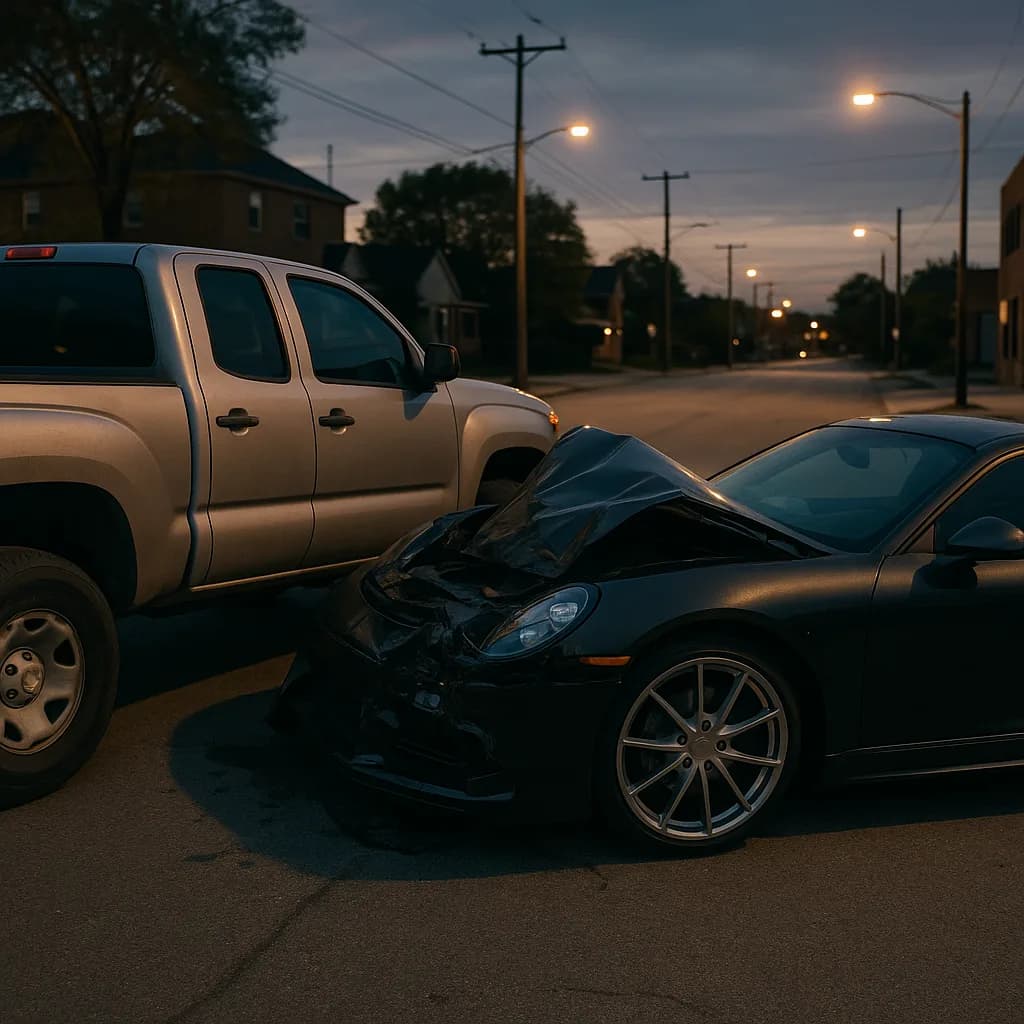
If you total the car while carrying only liability, you still owe the full loan balance. The other driver's insurance pays nothing toward your car if you caused the accident. Your own liability policy pays nothing toward your car ever. You are left with a loan on a car you cannot drive and no insurance check to pay it off. The lender will demand payment in full or repossess what is left of the vehicle and sue for the deficiency.
Some drivers assume gap insurance solves this problem. It does not. Gap insurance pays the difference between the car's value and the loan balance only when collision or comprehensive pays a total-loss claim first. If you have no collision or comprehensive coverage, gap insurance pays nothing. It is supplemental to full coverage, not a replacement for it.
Tennessee Uninsured Motorist Rate
21.3%
More than one in five Tennessee drivers carries no insurance at all. If an uninsured driver totals your financed car and you dropped collision coverage, you have no way to repair or replace it and still owe the loan.
Insurance Information Institute, 2023
When You Can Drop Full Coverage
You can drop collision and comprehensive the day you pay off the loan. Once the lender releases the lien, the car is yours free and clear, and Tennessee law imposes no requirement to insure it beyond liability. Whether you keep full coverage at that point depends on the car's value and your ability to replace it out of pocket if it is totaled.
Some drivers pay off the loan early specifically to drop full coverage and lower their premium. This makes sense only if the car's value has dropped below the point where a total loss would not be a financial catastrophe. If losing the car tomorrow would leave you unable to get to work or afford a replacement, keep collision and comprehensive regardless of whether the lender requires it.
Compare Carriers That Write Tennessee Multi-Car Policies
If you are financing one car in a household that insures two or more vehicles, the multi-car discount applies to every vehicle on the same policy, including the financed one. Combining all your household's cars on one policy with collision and comprehensive on the financed vehicle and liability-only on the paid-off cars usually costs less than insuring each car separately. Tennessee has 26 carriers writing standard and non-standard auto policies; rates for the same coverage vary by hundreds of dollars a year.
Get quotes from at least three carriers that write multi-car policies in Tennessee. Provide the VIN, loan payoff amount, and lender name for the financed car, and the year, make, and model for every other vehicle in the household. The quote will show the total premium with the multi-car discount applied and the per-vehicle breakdown. Compare the financed-car portion across carriers — collision and comprehensive premiums vary more than liability premiums do, and the difference compounds over the life of the loan.